
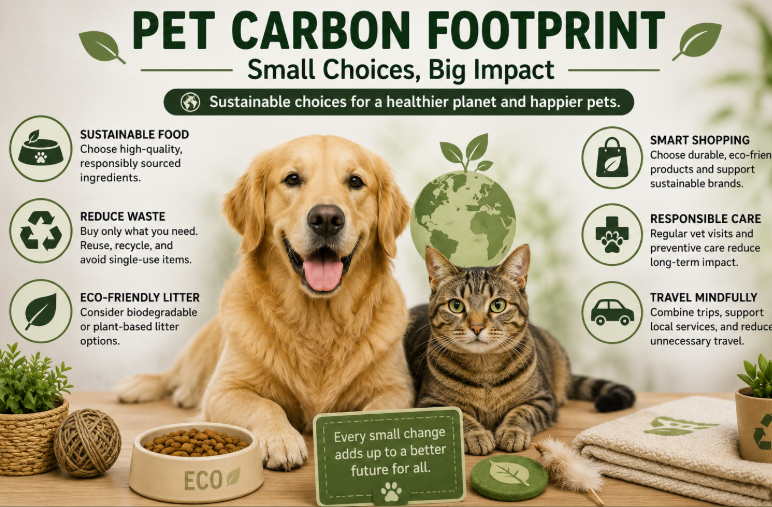
Pets bring joy, companionship, and emotional support to millions of households worldwide. Whether you share your home with a playful cat, a loyal dog, or several furry companions, pets often become cherished members of the family. However, as sustainability becomes a growing concern, many owners are beginning to ask an important question: how much impact do pets have on the environment? Understanding Pet Carbon Footprint can help owners make informed decisions that support both animal welfare and environmental responsibility.
Every living creature requires resources to survive. Pets need food, water, healthcare, toys, bedding, grooming supplies, and other products throughout their lives. Each of these necessities requires energy, transportation, manufacturing, and packaging. Consequently, all of these factors contribute to a household’s overall environmental impact. While pets provide countless benefits, their needs inevitably create a measurable Pet Carbon Footprint that deserves consideration.
The goal is not to discourage pet ownership. Rather, it is to understand where environmental impacts originate and identify practical ways to reduce them. Fortunately, many sustainable choices can help minimize emissions while maintaining excellent care standards. Small adjustments often create meaningful environmental benefits over time.
As awareness grows, more pet owners are seeking balanced approaches that support both their pets and the planet. Understanding the factors that contribute to Pet Carbon Footprint is an important first step toward more sustainable pet care.
What Is a Pet Carbon Footprint
A carbon footprint measures the total greenhouse gas emissions associated with an activity, product, or lifestyle. In the context of pets, Pet Carbon Footprint refers to the environmental impact generated by feeding, caring for, and maintaining companion animals throughout their lives.
These emissions arise from multiple sources. Food production often represents the largest contributor because raising livestock, processing ingredients, and transporting products require significant resources. In addition, pet accessories, veterinary care, waste management, and transportation also contribute to environmental impact.
The size of a pet’s footprint depends on several factors. Species, diet, size, lifestyle, and consumption habits all influence overall emissions. For example, larger animals generally require more food and resources than smaller pets.
Understanding Pet Carbon Footprint does not mean assigning blame. Instead, it provides a framework for evaluating how everyday choices affect the environment. With this knowledge, owners can identify opportunities to reduce waste and improve sustainability without compromising animal health.
As environmental concerns continue to grow, many experts encourage responsible pet ownership that includes consideration of ecological impacts alongside traditional care priorities.
Why Pet Food Has the Biggest Impact
When discussing Pet Carbon Footprint, food consistently emerges as the most significant factor. Producing pet food requires agricultural resources, land use, water consumption, processing facilities, packaging, and transportation networks.
Animal-based ingredients often generate higher emissions than plant-based ingredients because livestock production requires substantial resources. Since cats are obligate carnivores, their diets depend heavily on animal protein. Consequently, feline nutrition contributes directly to environmental impact.
Premium diets may sometimes require additional resources due to ingredient sourcing and specialized production methods. However, quality nutrition remains essential for long-term health. Therefore, sustainability efforts should never compromise a cat’s nutritional needs.
Food waste also affects Pet Carbon Footprint. Uneaten food that ends up discarded represents wasted resources and unnecessary emissions. Proper portion control and storage practices help reduce waste while supporting healthier feeding habits.
Some manufacturers now explore sustainable sourcing practices, alternative protein options, and environmentally responsible production methods. These innovations may help reduce future emissions while maintaining nutritional quality.
Although food remains the largest contributor, informed purchasing decisions can help reduce environmental impact without sacrificing feline health.
Packaging and Product Manufacturing
Pet ownership involves more than food alone. Litter, toys, scratching posts, bedding, grooming supplies, and feeding accessories all contribute to Pet Carbon Footprint through manufacturing and packaging processes.
Plastic packaging represents a particularly significant concern. Many pet products arrive in single-use containers, wrappers, or bags that eventually enter waste streams. Consequently, packaging choices can influence environmental impact substantially.
Manufacturing requires raw materials, energy consumption, and transportation. Every toy, brush, litter box, and accessory carries an environmental cost before reaching store shelves.
Fortunately, many companies now offer sustainable alternatives. Products made from recycled materials, responsibly sourced wood, natural fibers, or biodegradable components help reduce resource consumption.
Durability also matters. High-quality products that last for years often create a smaller Pet Carbon Footprint than cheaper items requiring frequent replacement. Therefore, investing in long-lasting accessories may provide environmental benefits over time.
Thoughtful purchasing decisions encourage manufacturers to continue developing more sustainable products while helping owners reduce unnecessary waste.
The Environmental Impact of Cat Litter
For cat owners, litter represents a unique contributor to Pet Carbon Footprint. Traditional clay litter requires mining, processing, packaging, and transportation. These activities consume resources and generate emissions throughout the product lifecycle.
Because litter requires regular replacement, its cumulative environmental impact can become significant over a cat’s lifetime. Consequently, many environmentally conscious owners seek alternative options.
Biodegradable litters made from recycled paper, wood, corn, wheat, or other renewable materials offer potentially more sustainable choices. These products often rely on renewable resources rather than mined materials.
Proper disposal also influences environmental outcomes. Although composting pet waste requires careful consideration and appropriate methods, responsible waste management helps reduce environmental risks.
Reducing litter waste begins with proper maintenance. Keeping litter boxes clean and using appropriate amounts can extend product life while minimizing unnecessary consumption.
As part of a broader sustainability strategy, litter choices play an important role in managing Pet Carbon Footprint effectively.
Transportation and Veterinary Care
Transportation contributes to Pet Carbon Footprint in ways that owners may not immediately recognize. Trips to veterinary clinics, grooming appointments, pet stores, and boarding facilities all involve fuel consumption and emissions.
Routine veterinary care remains essential and should never be avoided for environmental reasons. Preventive healthcare actually supports sustainability because healthy pets often require fewer emergency treatments and medical interventions.
Many owners reduce transportation-related emissions by combining errands, purchasing supplies online through consolidated deliveries, or selecting nearby service providers.
Veterinary facilities themselves also contribute to environmental impact through energy use, medical supplies, and waste generation. However, many clinics increasingly adopt sustainability initiatives to reduce their ecological footprint.
Although transportation represents a smaller contributor than food production, it still influences overall Pet Carbon Footprint and provides opportunities for environmentally conscious decision-making.
Balancing convenience, health, and sustainability allows owners to support both their pets and environmental goals effectively.
How Overconsumption Increases Environmental Impact
Modern pet marketing often encourages frequent purchases of toys, accessories, seasonal products, and novelty items. While occasional treats and enrichment products benefit pets, excessive consumption can significantly increase Pet Carbon Footprint.
Many cats remain perfectly happy with a few high-quality toys rotated regularly. Consequently, purchasing fewer but more durable products often reduces waste without reducing enrichment.
Impulse purchases frequently lead to unused items that eventually become waste. Therefore, thoughtful buying habits support both financial savings and environmental responsibility.
Reusing, repairing, and repurposing existing products further reduces resource consumption. Cardboard boxes, paper bags without handles, and homemade enrichment activities often provide excellent entertainment at minimal environmental cost.
Sustainability does not require eliminating enjoyment. Instead, it encourages intentional choices that prioritize quality, usefulness, and longevity over constant replacement.
Reducing unnecessary consumption remains one of the simplest ways to lower Pet Carbon Footprint while maintaining a fulfilling life for companion animals.
Practical Ways to Reduce Environmental Impact
Fortunately, reducing Pet Carbon Footprint does not require dramatic lifestyle changes. Small, consistent actions often create meaningful results over time.
Choosing high-quality food that minimizes waste represents an important first step. Proper storage and portion control help ensure resources are used efficiently.
Selecting durable products instead of disposable alternatives reduces manufacturing demand and waste generation. Reusable grooming tools, washable bedding, and long-lasting accessories provide practical examples.
Sustainable litter options may further reduce environmental impact. Owners can explore products made from renewable or recycled materials while ensuring suitability for their cats.
Supporting environmentally responsible brands encourages continued innovation within the pet industry. Companies that prioritize sustainable sourcing and packaging often contribute positively to broader environmental goals.
Finally, adopting pets from shelters rather than supporting unnecessary breeding can promote responsible animal welfare practices while reducing demand for additional resource-intensive production.
Each small improvement contributes to a lower Pet Carbon Footprint without compromising the quality of care pets receive.
Balancing Sustainability and Pet Welfare
Environmental responsibility should always complement, not replace, proper pet care. The primary responsibility of every owner remains ensuring their pet’s health, safety, and well-being.
A thoughtful approach to Pet Carbon Footprint recognizes that sustainability and animal welfare can coexist. Owners should never sacrifice nutrition, healthcare, or essential needs in pursuit of lower emissions.
Instead, the goal is to identify opportunities where environmental benefits align with responsible care. Fortunately, many sustainable choices also improve efficiency, reduce waste, and save money.
Cats depend entirely on their owners for daily care. Consequently, every decision should prioritize their physical and emotional needs while considering environmental consequences where practical.
Balancing these priorities creates a realistic and compassionate approach to sustainable pet ownership.
Conclusion
Pet Carbon Footprint reflects the environmental impact associated with caring for companion animals. Food production, litter use, product manufacturing, transportation, and consumption habits all contribute to a pet’s overall ecological footprint.
While pets inevitably require resources, owners can make thoughtful choices that reduce environmental impact without compromising health or happiness. Sustainable food practices, durable products, responsible waste management, and mindful consumption all help support greener pet ownership.
The goal is not perfection but progress. Small changes implemented consistently can produce meaningful environmental benefits over time. By understanding the factors that influence Pet Carbon Footprint, pet owners can make informed decisions that support both their beloved companions and the planet they share.
FAQ
1. What contributes most to a pet’s environmental impact?
Pet food production typically represents the largest contributor due to resource-intensive ingredient sourcing and manufacturing.
2. Can sustainable litter reduce ecological impact?
Yes. Many biodegradable litter options use renewable materials and may lower environmental impact.
3. Should sustainability affect pet nutrition choices?
Pet health should always come first. Sustainable choices should never compromise proper nutrition.
4. Do durable pet products help the environment?
Yes. Long-lasting products reduce waste and decrease the need for frequent replacements.
5. How can owners start reducing emissions today?
Focus on reducing waste, buying durable items, supporting responsible brands, and avoiding unnecessary purchases.