
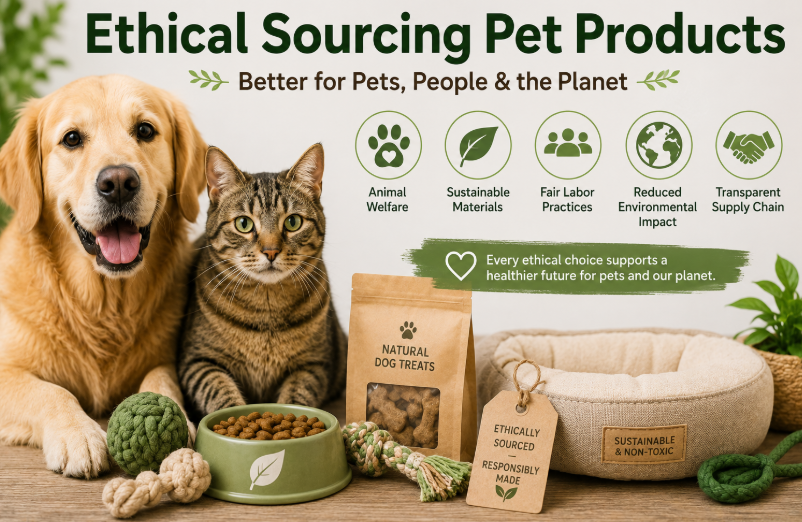
As pet owners become more conscious of how products are made, many are asking important questions about where pet supplies come from and how companies source their materials. From pet food and treats to toys, bedding, and accessories, purchasing decisions now extend beyond quality and price alone. Consumers increasingly want products that align with their values. This growing awareness has brought Ethical Sourcing Pet Products into the spotlight and encouraged companies to become more transparent about their supply chains.
For many people, pets are family members. Naturally, owners want the products they buy to support both animal well-being and responsible business practices. Ethical sourcing focuses on obtaining ingredients and materials in ways that respect animals, workers, communities, and the environment. Consequently, understanding ethical sourcing can help consumers make informed choices while supporting companies committed to positive change.
The concept of Ethical Sourcing Pet Products extends across the entire production process. It involves evaluating where materials originate, how workers are treated, how animals are affected, and what environmental impact manufacturing creates. Although the term appears frequently in marketing, true ethical sourcing requires measurable commitments and ongoing accountability.
As demand for transparency continues to grow, responsible sourcing has become an important factor in the pet industry. Consumers increasingly seek brands that demonstrate integrity through their practices rather than relying solely on advertising claims.
Understanding What Ethical Sourcing Means
Ethical sourcing refers to obtaining materials, ingredients, and resources through methods that prioritize fairness, sustainability, and responsibility. Rather than focusing exclusively on profit, ethical sourcing considers the broader impact of production decisions.
For companies producing Ethical Sourcing Pet Products, this often means working with suppliers who maintain humane animal welfare standards, fair labor practices, and environmentally responsible operations. These businesses actively evaluate their supply chains to ensure they meet established ethical guidelines.
The process begins long before products reach store shelves. Manufacturers often assess farms, fisheries, factories, and material providers to verify compliance with sourcing standards. As a result, consumers gain greater confidence in the products they purchase.
Ethical sourcing also encourages transparency. Companies that embrace responsible practices often provide information about ingredient origins, manufacturing processes, and sustainability initiatives. This openness helps build trust while allowing consumers to make more informed decisions.
Although standards vary between organizations, most ethical sourcing programs share common goals. These include reducing environmental harm, supporting worker rights, promoting humane treatment of animals, and encouraging long-term sustainability.
Why Animal Welfare Plays a Major Role
Animal welfare remains one of the most important aspects of Ethical Sourcing Pet Products. Many pet foods, treats, and accessories rely on animal-derived ingredients or materials. Consequently, sourcing practices directly influence how animals are raised and treated.
Responsible companies often partner with suppliers that follow established welfare standards. These standards may address housing conditions, nutrition, veterinary care, transportation practices, and humane handling procedures. By supporting higher welfare requirements, ethical sourcing encourages better treatment throughout the supply chain.
Consumers increasingly pay attention to these issues because they want consistency between how they care for their own pets and how other animals are treated. As awareness grows, demand for responsibly sourced ingredients continues to increase.
Ethical sourcing may also involve avoiding materials linked to unnecessary animal suffering. Some manufacturers seek alternative ingredients or work only with suppliers that meet specific welfare certifications. Therefore, purchasing decisions can help influence industry standards over time.
While no system is perfect, supporting Ethical Sourcing Pet Products encourages businesses to prioritize animal welfare and invest in continuous improvement.
Environmental responsibility represents another critical component of ethical sourcing. Manufacturing pet products requires resources such as water, energy, raw materials, and transportation networks. Without careful management, these activities can contribute to pollution, habitat destruction, and climate-related challenges.
Companies committed to Ethical Sourcing Pet Products often evaluate the environmental impact of their operations. They may prioritize renewable materials, reduce packaging waste, improve energy efficiency, and support sustainable agriculture or fishing practices.
Sustainably sourced ingredients help protect ecosystems while ensuring long-term resource availability. For example, responsible fisheries use practices designed to prevent overfishing and maintain healthy marine populations. Similarly, sustainable farming methods can reduce environmental strain while supporting biodiversity.
Packaging also receives increased attention. Many brands now use recycled, recyclable, or biodegradable materials to minimize waste. These efforts help reduce the environmental footprint associated with pet ownership.
Consumers who choose ethically sourced products contribute to broader sustainability goals. While individual purchases may seem small, collective demand can encourage meaningful industry-wide changes.
Fair Labor Practices and Community Impact
Ethical sourcing extends beyond environmental concerns and animal welfare. It also includes the treatment of people involved in production and distribution. Workers play a vital role in every stage of the supply chain, making fair labor practices an essential consideration.
Manufacturers of Ethical Sourcing Pet Products often work with suppliers that provide safe working conditions, fair wages, and reasonable employment standards. These protections help support worker well-being while promoting long-term economic stability.
In some cases, ethical sourcing initiatives also benefit local communities. Companies may invest in educational programs, infrastructure improvements, or community development projects that create positive social impacts.
Consumers frequently overlook the human side of manufacturing. However, responsible sourcing recognizes that ethical products depend on ethical treatment throughout the entire production process. Therefore, labor practices remain an important component of evaluating a company’s overall commitment to responsibility.
Transparency helps consumers identify businesses that prioritize these values. Companies willing to disclose sourcing information often demonstrate stronger accountability and a greater commitment to ethical standards.
How to Identify Responsibly Sourced Products
Determining whether a product truly meets ethical standards can sometimes feel challenging. Marketing language often includes terms such as natural, sustainable, responsible, and ethical. However, these claims do not always provide meaningful information.
When evaluating Ethical Sourcing Pet Products, consumers should look for specific details rather than broad statements. Certifications, third-party audits, and published sourcing policies often provide stronger evidence of responsible practices.
Many reputable companies share information about ingredient origins, supplier relationships, and sustainability goals. Detailed sourcing reports and transparency initiatives can help consumers understand how products are made.
Product packaging may also include certifications related to animal welfare, environmental sustainability, or labor standards. While certifications vary in scope, they often indicate that independent organizations have reviewed certain aspects of production.
Researching brand values can provide additional insights. Companies that prioritize ethical sourcing typically communicate their commitments clearly and consistently. As a result, consumers can make more informed purchasing decisions.
Price alone should not determine whether a product qualifies as ethically sourced. Although responsible products sometimes cost more due to higher production standards, affordability and ethical practices are not always mutually exclusive.
The Growing Demand for Responsible Pet Products
Consumer expectations continue to evolve. Today’s pet owners increasingly seek products that reflect their personal values while meeting the needs of their animals. This shift has created growing demand for Ethical Sourcing Pet Products across multiple categories.
Pet food manufacturers now face greater pressure to disclose ingredient sourcing and production methods. Similarly, toy and accessory companies receive increased scrutiny regarding material selection and manufacturing practices.
As awareness expands, businesses recognize that ethical sourcing can strengthen customer trust and brand loyalty. Consequently, more companies invest in transparency, sustainability initiatives, and responsible supply chain management.
Technology also plays a role in this transformation. Improved tracking systems allow businesses to monitor sourcing practices more effectively. These tools help verify compliance and provide consumers with greater visibility into product origins.
Industry-wide progress often begins with consumer demand. By supporting ethically sourced options, pet owners encourage companies to maintain higher standards and pursue continuous improvement.
Balancing Ethics, Quality, and Practicality
While ethical sourcing offers many benefits, consumers often balance multiple priorities when making purchasing decisions. Product quality, safety, affordability, and availability all influence buying behavior.
Fortunately, many Ethical Sourcing Pet Products deliver strong performance alongside responsible production practices. Ethical sourcing does not require sacrificing quality. In many cases, companies committed to responsible practices also emphasize superior materials and manufacturing standards.
Consumers should focus on finding products that align with both their values and their pets’ needs. This balanced approach helps support responsible businesses while ensuring pets receive safe and effective products.
Making perfect choices is not always possible. However, even small steps toward more responsible purchasing can contribute to meaningful positive change. Every informed decision sends a signal to manufacturers about what consumers value most.
Over time, continued demand for ethically sourced products may encourage broader improvements throughout the pet industry. As more companies adopt responsible practices, ethical sourcing becomes increasingly accessible to everyday consumers.
Conclusion
Understanding Ethical Sourcing Pet Products helps pet owners make purchasing decisions that reflect both compassion and responsibility. Ethical sourcing considers animal welfare, environmental sustainability, fair labor practices, and community impact throughout the production process.
As consumer awareness continues to grow, responsible sourcing has become an important factor in the pet industry. Companies that prioritize transparency and accountability help build trust while supporting positive change across their supply chains.
Although no product is perfect, choosing ethically sourced options encourages higher standards and promotes long-term sustainability. By supporting businesses committed to responsible practices, pet owners can contribute to a future where quality pet care and ethical values work together.
FAQ
1. What does responsible sourcing involve?
Responsible sourcing includes fair labor practices, environmental protection, transparency, and humane treatment of animals.
2. Why is animal welfare important in pet product manufacturing?
Animal welfare standards help ensure humane treatment throughout the production process and support responsible industry practices.
3. Are sustainable pet products always more expensive?
Not necessarily. While some products cost more, many responsibly sourced options remain competitively priced.
4. How can I verify sourcing claims made by brands?
Look for certifications, transparency reports, supplier information, and third-party verification programs.
5. Does buying responsibly sourced products make a difference?
Yes. Consumer demand encourages companies to improve sourcing standards and invest in more ethical practices.