
Many cat owners are familiar with food sensitivities and flea allergies, but fewer understand the impact of Environmental Allergies in Cats. These allergies can cause significant discomfort and often affect a cat’s quality of life. While some symptoms appear mild at first, ongoing exposure to allergens can lead to chronic itching, skin irritation, and recurring health issues. As a result, understanding how environmental allergies develop is an important part of responsible pet care.
Cats interact with their environment every day. They spend time on carpets, furniture, bedding, and outdoor surfaces. Along the way, they encounter countless substances that may trigger allergic reactions. Pollen, mold spores, dust mites, grasses, and household chemicals are among the most common culprits. Although these substances appear harmless to most cats, they can cause an exaggerated immune response in sensitive individuals.
The growing awareness of Environmental Allergies in Cats has helped veterinarians diagnose and manage these conditions more effectively. However, many owners still mistake allergy symptoms for other health problems. Because early intervention can improve outcomes, learning to recognize the warning signs is essential.
An allergy occurs when the immune system reacts to a substance that would normally be harmless. Instead of ignoring the allergen, the body identifies it as a threat and launches a defensive response. This reaction triggers inflammation, itching, and various physical symptoms.
Unlike food allergies, which are linked to specific dietary ingredients, Environmental Allergies in Cats develop in response to substances found in a cat’s surroundings. These allergens may be seasonal or present year-round. Consequently, symptoms can vary depending on exposure levels and environmental conditions.
Some cats inherit a predisposition to allergies. Genetics can influence how the immune system responds to certain triggers. Therefore, certain cats may be more susceptible than others even when living in the same environment.
Environmental allergies can develop at any age, although many cases appear during early adulthood. Some cats show symptoms gradually, while others experience sudden flare-ups. Because reactions differ between individuals, accurate diagnosis often requires a thorough veterinary evaluation.
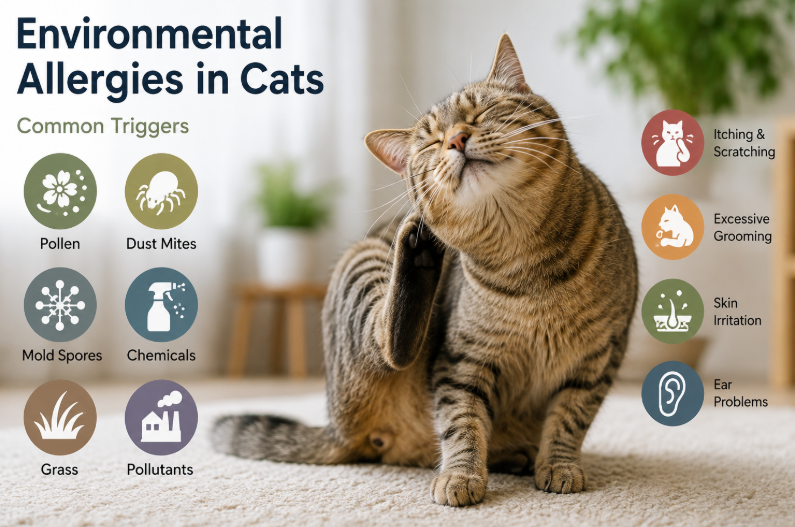
One reason Environmental Allergies in Cats can be difficult to identify is that symptoms often resemble other conditions. Itching is one of the most common signs. Affected cats may scratch frequently, rub against furniture, or groom excessively.
Overgrooming deserves particular attention because cats often respond to skin irritation by licking affected areas repeatedly. This behavior can lead to hair loss, skin redness, and secondary infections. In some cases, owners may not even realize itching is occurring because the cat primarily licks rather than scratches.
Skin lesions may also develop. Constant irritation can damage the skin barrier and create opportunities for bacterial or yeast infections. As a result, allergic cats often require treatment for both the allergy and any related skin complications.
Another common symptom involves recurring ear issues. Although ear infections are more frequently associated with dogs, cats with allergies can experience ear inflammation as well. Persistent head shaking, scratching near the ears, or excessive ear debris may indicate an underlying allergic condition.
Respiratory symptoms occasionally occur too. Sneezing, watery eyes, and nasal congestion can sometimes accompany Environmental Allergies in Cats, particularly when airborne allergens are involved. However, skin-related symptoms remain the most common presentation.
Common Triggers Found in Everyday Environments
Environmental allergens are present almost everywhere. Dust mites rank among the most frequent indoor triggers. These microscopic organisms thrive in bedding, carpets, upholstery, and other soft surfaces. Even clean homes contain some level of dust mite exposure.
Pollen is another major contributor to Environmental Allergies in Cats. Trees, grasses, and weeds release pollen throughout different seasons. Cats may encounter pollen outdoors or bring it inside on their fur after spending time near open windows, balconies, or gardens.
Mold spores can also trigger allergic reactions. Mold often develops in damp areas such as basements, bathrooms, laundry rooms, and poorly ventilated spaces. Because spores become airborne easily, exposure can occur without obvious signs of mold growth.
Household cleaning products may contribute to irritation as well. Strong fragrances, chemical sprays, air fresheners, and scented detergents sometimes worsen symptoms in sensitive cats. Although these substances are not always true allergens, they can aggravate existing conditions.
Certain fabrics, carpeting materials, and environmental pollutants may also play a role. Consequently, identifying the specific cause of Environmental Allergies in Cats often requires patience and careful observation.
Seasonal allergies occur when symptoms appear during specific times of the year. For example, a cat may experience increased itching during spring when tree pollen levels rise. Symptoms often improve once the season changes and allergen exposure decreases.
Year-round allergies behave differently. Dust mites, indoor molds, and household irritants can remain present throughout the year. As a result, affected cats may experience ongoing discomfort with only occasional fluctuations in severity.
Distinguishing between seasonal and non-seasonal Environmental Allergies in Cats helps veterinarians narrow down potential triggers. Owners who track symptom patterns often provide valuable information that supports diagnosis and treatment planning.
Changes in weather, humidity, and indoor ventilation can influence symptom severity. Therefore, environmental conditions should always be considered when evaluating allergic reactions.
How Veterinarians Diagnose Allergic Conditions
Diagnosing allergies can be challenging because no single symptom confirms the condition. Veterinarians typically begin by ruling out other causes of itching and skin irritation. Flea infestations, skin infections, parasites, and food allergies may produce similar signs.
A detailed medical history plays an important role. Owners may be asked about symptom timing, environmental changes, grooming habits, and previous treatments. This information helps identify patterns that may indicate Environmental Allergies in Cats.
Allergy testing may be recommended in some cases. Intradermal skin testing and blood tests can help identify potential allergens. Although these tests do not always provide definitive answers, they often contribute useful information for treatment planning.
Response to therapy can also support diagnosis. If symptoms improve after reducing exposure to suspected allergens or using specific medications, environmental allergies become more likely.
Because allergic conditions often involve multiple factors, diagnosis may require several steps. Patience and close communication with a veterinarian are important throughout the process.
Treatment Options That Improve Comfort
Managing allergies typically focuses on reducing symptoms and minimizing allergen exposure. Unfortunately, complete elimination of environmental triggers is rarely possible. However, many cats achieve significant improvement with appropriate treatment.
Medications often play a key role in controlling inflammation and itching. Veterinarians may prescribe therapies that help reduce immune system overreactions associated with Environmental Allergies in Cats.
Skin care also remains important. Medicated shampoos, wipes, and topical treatments can help soothe irritation while supporting skin health. These products often reduce discomfort and help prevent secondary infections.
Omega-3 fatty acids may provide additional benefits. These nutrients support skin barrier function and help maintain healthy skin. Consequently, many veterinarians recommend nutritional support as part of a comprehensive treatment plan.
Allergen-specific immunotherapy represents another option. This approach involves exposing the immune system to controlled amounts of allergens over time. The goal is to reduce sensitivity and improve tolerance. While results vary, some cats experience significant long-term improvement.
Environmental management strategies can further enhance treatment success. Frequent vacuuming, air filtration systems, regular bedding washing, and reducing household dust may help minimize exposure to common triggers.
Preventing Flare-Ups and Supporting Long-Term Health
Although prevention is not always possible, proactive care can reduce the frequency and severity of symptoms. Maintaining a clean environment is one of the most effective strategies. Regular cleaning removes allergens before they accumulate.
Air quality also matters. High-efficiency air filters may help reduce airborne particles associated with Environmental Allergies in Cats. Improved ventilation can further support a healthier indoor environment.
Routine grooming can remove allergens from a cat’s coat before they trigger irritation. Gentle brushing and occasional wiping may reduce exposure while supporting skin health.
Nutrition plays a supportive role as well. A balanced diet rich in essential nutrients helps maintain healthy skin and strengthens the body’s natural defenses. While nutrition alone cannot cure allergies, it contributes to overall resilience.
Regular veterinary checkups remain essential for long-term management. Allergic conditions often change over time, and treatment plans may require adjustments. Consistent monitoring helps ensure continued comfort and well-being.
Conclusion
Environmental Allergies in Cats can significantly affect comfort, skin health, and overall quality of life. While symptoms often begin with itching or excessive grooming, underlying allergic reactions may lead to ongoing irritation and secondary complications if left untreated.
Fortunately, modern veterinary medicine offers numerous options for diagnosis and management. Identifying triggers, reducing exposure, supporting skin health, and following appropriate treatment plans can help affected cats live more comfortable lives.
Although allergies may require lifelong management, many cats experience substantial improvement when owners understand the condition and take proactive steps. Through observation, veterinary guidance, and consistent care, it is possible to minimize symptoms and support long-term feline wellness.
FAQ
1. What causes allergic reactions to environmental triggers?
An overactive immune response causes the body to react to normally harmless substances such as pollen, dust, or mold.
2. Can seasonal changes make symptoms worse?
Yes. Many cats experience flare-ups during periods of increased pollen or other seasonal allergen exposure.
3. Are skin problems the most common sign of allergies?
Yes. Itching, overgrooming, hair loss, and skin irritation are among the most common symptoms.
4. Can indoor cats develop allergy issues?
Absolutely. Indoor environments contain dust mites, mold spores, and other potential triggers.
5. Is there a permanent cure for these conditions?
There is no guaranteed cure, but effective management can greatly reduce symptoms and improve quality of life.