
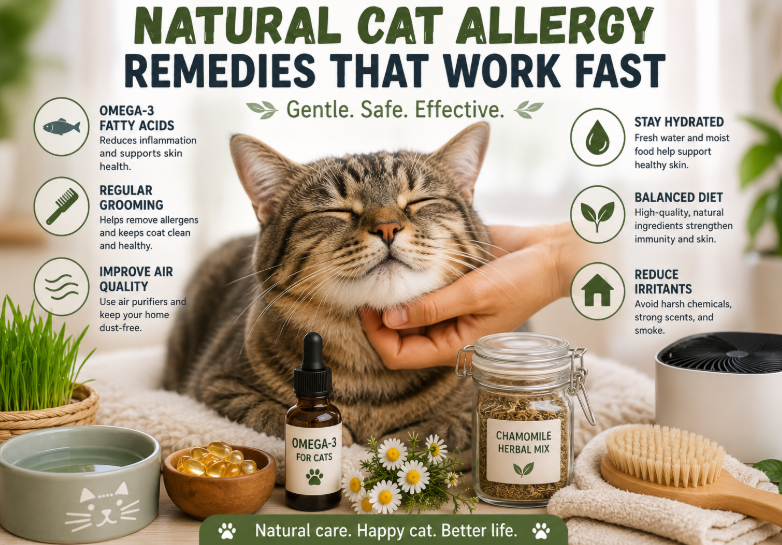
When a cat starts scratching constantly, licking its fur excessively, or developing irritated skin, many owners begin searching for solutions that provide relief without immediately relying on medications. While veterinary care remains essential for persistent or severe symptoms, certain supportive approaches may help reduce discomfort and improve quality of life. Understanding Natural Cat Allergy Remedies can help owners identify safe and practical options that complement professional treatment plans while supporting their cat’s overall well-being.
Cat allergies can arise from many different sources. Environmental allergens such as pollen, dust mites, mold spores, and household chemicals frequently contribute to symptoms. Some cats react to ingredients in food, while others develop sensitivities to flea bites. Because multiple triggers may cause similar symptoms, identifying the underlying cause remains an important first step. Even so, several Natural Cat Allergy Remedies may help soothe irritated skin and reduce inflammation while owners work with veterinarians to determine the root problem.
Many allergy symptoms develop gradually. A cat may begin grooming excessively, scratching more frequently, or developing small patches of irritated skin. Consequently, early intervention often helps prevent symptoms from becoming more severe. By combining proper veterinary guidance with supportive natural strategies, owners can often improve comfort and help their cats feel better more quickly.
Natural approaches do not replace medical treatment when allergies become serious. However, they may provide valuable support for managing mild symptoms and promoting healthier skin and coat conditions.
Understanding Why Cat Allergies Occur
Before exploring Natural Cat Allergy Remedies, it helps to understand what happens during an allergic reaction. Allergies occur when the immune system overreacts to substances that would normally be harmless. This response triggers inflammation and produces symptoms such as itching, redness, swelling, and discomfort.
Environmental allergies are among the most common causes of feline skin irritation. Cats encounter allergens through direct contact, inhalation, or exposure within their living environment. As a result, symptoms may fluctuate throughout the year depending on seasonal conditions.
Food sensitivities can also contribute to allergic reactions. Certain proteins or ingredients may trigger immune responses that affect both skin and digestive health. Consequently, some cats experience itching alongside vomiting, diarrhea, or gastrointestinal discomfort.
Flea allergy dermatitis represents another frequent problem. In these cases, even a single flea bite can trigger intense itching and irritation. Therefore, flea prevention remains a critical component of allergy management.
Understanding potential triggers helps owners choose appropriate Natural Cat Allergy Remedies while addressing the underlying causes of discomfort.
Omega-3 Fatty Acids for Skin Support
One of the most widely recommended Natural Cat Allergy Remedies involves increasing omega-3 fatty acid intake. These healthy fats support skin health and help maintain normal inflammatory responses throughout the body.
Fish oil often serves as a valuable source of omega-3 fatty acids. When provided appropriately, these nutrients may help reduce skin irritation while supporting coat quality and overall wellness.
Veterinarians frequently recommend omega-3 supplementation because allergies often affect the skin’s protective barrier. Strengthening this barrier may improve resilience and reduce sensitivity to environmental irritants.
Benefits typically develop gradually rather than immediately. However, consistent supplementation often contributes to noticeable improvements over time. Consequently, omega-3 fatty acids remain one of the most popular natural support options for allergic cats.
Owners should always select products formulated specifically for pets and consult their veterinarian regarding appropriate dosage recommendations. Proper supplementation helps maximize benefits while ensuring safety.
Because healthy skin forms the foundation of allergy management, omega-3s often play an important role in comprehensive care strategies.
Regular Grooming and Allergen Removal
Routine grooming provides another effective approach among Natural Cat Allergy Remedies. Allergens frequently accumulate on a cat’s fur and skin throughout the day. Removing these substances may help reduce irritation and minimize exposure.
Brushing helps eliminate loose fur, dirt, pollen, and other environmental particles. As a result, allergens spend less time in contact with the skin. Regular grooming also distributes natural oils that support coat health.
For cats that tolerate it, wiping the coat with a damp cloth can further reduce allergen buildup. This simple practice often proves especially helpful during high-pollen seasons.
Grooming sessions provide additional benefits because they allow owners to monitor skin condition closely. Early detection of redness, hair loss, or irritation often leads to faster intervention.
Although grooming alone cannot cure allergies, it complements other Natural Cat Allergy Remedies by reducing ongoing exposure to common triggers.
Consistency remains important. Regular maintenance typically produces better results than occasional intensive grooming sessions.
Improving Indoor Air Quality
Environmental allergens contribute significantly to feline allergy symptoms. Therefore, improving indoor air quality ranks among the most practical Natural Cat Allergy Remedies available to many households.
Airborne particles such as dust, pollen, mold spores, and dander can irritate sensitive cats. Consequently, reducing these substances may decrease allergy-related discomfort.
Air purifiers equipped with high-efficiency filtration systems often help remove airborne allergens. Many owners notice improvements when air quality becomes cleaner and more stable.
Regular vacuuming also supports allergy management. Dust and allergens accumulate within carpets, furniture, and bedding. Routine cleaning helps minimize these environmental triggers.
Washing pet bedding frequently provides additional benefits. Clean sleeping areas reduce allergen exposure during rest and may help improve overall comfort.
Simple environmental improvements often complement other Natural Cat Allergy Remedies effectively because they address triggers directly rather than focusing solely on symptoms.
Hydration and Skin Health
Healthy skin depends heavily on proper hydration. Consequently, maintaining adequate fluid intake represents another useful strategy among Natural Cat Allergy Remedies.
Cats naturally consume much of their moisture through food. Therefore, incorporating wet food into the diet may support hydration while benefiting skin and coat condition.
Fresh water should remain available at all times. Some cats drink more readily from fountains, which provide moving water and encourage greater intake.
Hydrated skin tends to maintain stronger barrier function. This protective barrier helps defend against irritants while supporting overall skin health.
While hydration alone does not eliminate allergies, it contributes to healthier skin conditions that may reduce irritation and discomfort. Combined with other supportive measures, proper moisture intake often enhances overall results.
Because hydration influences multiple aspects of health, its benefits extend beyond allergy management alone.
A Balanced Diet and Nutritional Support
Nutrition plays an important role in skin health and immune function. Therefore, dietary quality deserves careful consideration when exploring Natural Cat Allergy Remedies.
High-quality animal protein supports tissue repair and healthy skin maintenance. Essential vitamins and minerals contribute to normal immune responses while promoting coat condition.
Some cats benefit from limited-ingredient diets when food sensitivities contribute to symptoms. These diets reduce exposure to potential triggers while simplifying ingredient evaluation.
Probiotics may also support digestive and immune health. Research suggests that gut health influences immune function, making digestive wellness an important consideration for allergic cats.
Owners should avoid making dramatic dietary changes without professional guidance. However, improving nutritional quality often complements other Natural Cat Allergy Remedies and supports overall well-being.
Balanced nutrition provides the foundation upon which other supportive strategies can build.
Reducing Household Irritants
Many common household products contain substances that may aggravate sensitive cats. Identifying and reducing these exposures can enhance the effectiveness of Natural Cat Allergy Remedies.
Strong cleaning products, scented candles, air fresheners, perfumes, and certain detergents sometimes contribute to irritation. Consequently, switching to gentler alternatives may benefit allergic cats.
Unscented cleaning products often provide a safer option for sensitive households. Similarly, fragrance-free laundry detergents may reduce exposure to potential irritants.
Smoke exposure can also worsen allergy symptoms. Maintaining a clean indoor environment helps support respiratory and skin health simultaneously.
Owners often overlook these factors because household products seem unrelated to feline health. However, reducing environmental irritants frequently contributes to noticeable improvements in comfort.
Simple adjustments can sometimes produce meaningful benefits when combined with other allergy management strategies.
Knowing When Veterinary Care Is Necessary
Although many Natural Cat Allergy Remedies offer valuable support, owners should recognize when professional evaluation becomes necessary. Persistent or severe symptoms often require medical attention.
Excessive scratching, open wounds, recurring infections, significant hair loss, and chronic discomfort should never be ignored. These signs may indicate more serious underlying conditions.
Veterinarians can identify specific triggers through diagnostic testing, elimination diets, and physical examinations. Accurate diagnosis often leads to more effective treatment plans.
Natural approaches work best as supportive measures rather than replacements for medical care. Consequently, combining veterinary guidance with appropriate home strategies typically produces the best outcomes.
Early intervention helps prevent complications and improves quality of life. Therefore, owners should seek professional advice whenever symptoms worsen or fail to improve.
Responsible allergy management balances natural support with evidence-based veterinary care.
Conclusion
Natural Cat Allergy Remedies can provide valuable support for cats experiencing itching, irritation, and mild allergy-related discomfort. Strategies such as omega-3 supplementation, regular grooming, improved air quality, proper hydration, balanced nutrition, and reduced exposure to household irritants often contribute to healthier skin and greater comfort.
However, successful allergy management begins with identifying the underlying cause. While natural remedies may soothe symptoms and support overall wellness, veterinary guidance remains essential for persistent or severe cases.
By combining professional care with thoughtful natural strategies, owners can help their cats experience faster relief and improved quality of life. Small adjustments often make a meaningful difference, especially when implemented consistently and as part of a comprehensive approach to feline health.
FAQ
1. What causes most feline allergy symptoms?
Environmental allergens, food sensitivities, and flea allergies are among the most common causes.
2. Can omega-3 supplements help itchy skin?
Yes. Omega-3 fatty acids may support skin health and healthy inflammatory responses.
3. How often should I groom an allergic cat?
Regular brushing helps remove allergens and supports coat health, though frequency depends on coat type.
4. Do air purifiers help reduce allergy triggers?
Many air purifiers help remove airborne allergens such as dust, pollen, and dander.
5. When should I contact a veterinarian about itching?
Seek veterinary advice if symptoms become severe, persistent, or lead to skin damage and infections.