
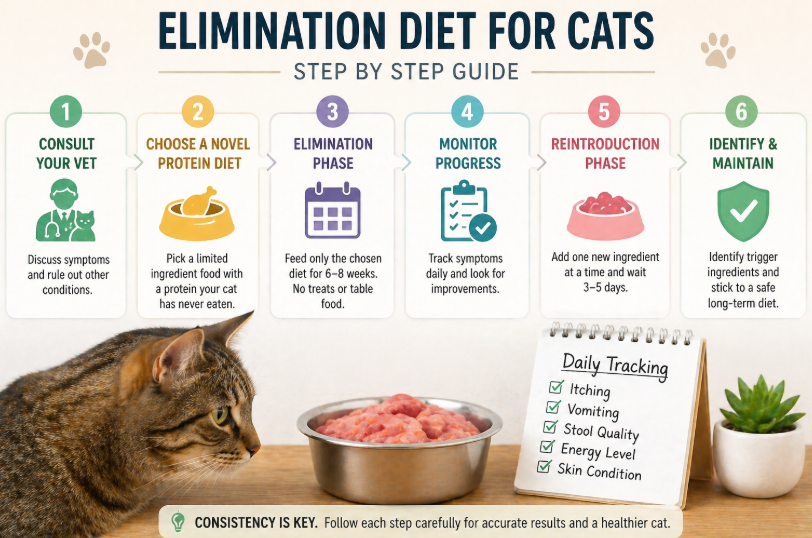
If your cat is showing signs of allergies or digestive problems, an elimination diet for cats can be one of the most effective ways to identify the cause. Many cats react to specific ingredients, yet it can be difficult to pinpoint the trigger without a structured approach. By using an elimination diet for cats, you can systematically remove potential allergens and observe how your cat responds over time.
Cats rely on consistent nutrition, so any signs of discomfort should be taken seriously. Whether it is itching, vomiting, or diarrhea, these symptoms often indicate sensitivity to something in the diet. A properly planned elimination diet for cats allows you to uncover these issues safely and build a healthier feeding routine.
Why An Elimination Diet Is Necessary
An elimination diet for cats is designed to identify food allergies or intolerances that may not be obvious. Unlike quick changes, this method focuses on removing and reintroducing ingredients in a controlled way. As a result, it becomes easier to detect which foods cause problems.
Food allergies can develop over time, even with ingredients your cat has eaten for years. Because of this, symptoms may appear suddenly. By following an elimination diet for cats, you gain clarity and avoid guesswork.
In addition, this approach supports long-term health. Once triggers are identified, you can create a diet that avoids them completely.
Common Symptoms That Require Dietary Testing
Certain symptoms often signal the need for an elimination diet for cats. Digestive problems such as vomiting or diarrhea are among the most common indicators. These issues may occur regularly or only after certain meals.
Skin-related symptoms are also important. Excessive scratching, redness, or hair loss may point to food sensitivities. In some cases, ear infections or inflammation can also be linked to diet.
Behavioral changes should not be ignored either. A cat that becomes irritable or less active may be experiencing discomfort. Recognizing these signs helps you decide when to begin an elimination diet for cats.
Choosing The Right Starting Diet
Selecting the correct starting point is essential for a successful elimination diet for cats. The goal is to use a limited ingredient diet that your cat has never eaten before. This reduces the chances of triggering a reaction.
Novel proteins such as duck, rabbit, or venison are often recommended. These options are less likely to cause allergies compared to common proteins like chicken or beef. In addition, the diet should be simple and free from unnecessary additives.
Consistency is critical during this phase. Feeding only the chosen diet ensures accurate results. Even small treats or table scraps can interfere with the process.
How To Transition Your Cat Properly
Transitioning into an elimination diet for cats should be done gradually to avoid digestive upset. Start by mixing a small portion of the new food with your cat’s current diet. Over several days, increase the new portion while reducing the old one.
This slow transition allows your cat’s digestive system to adjust. It also helps prevent symptoms that may occur due to sudden changes rather than allergies.
Once the transition is complete, it is important to maintain strict consistency. Feeding only the selected diet ensures that the elimination diet for cats remains effective.
The Elimination Phase Explained
The elimination phase is the core of the elimination diet for cats. During this period, your cat eats only the selected limited ingredient diet for several weeks. Typically, this phase lasts between six to eight weeks.
During this time, you should monitor your cat closely. Improvements in symptoms indicate that the removed ingredients may have been causing issues. However, patience is essential, as changes may take time to appear.
Avoid introducing any new foods during this phase. Consistency ensures that results are reliable and easy to interpret.
Monitoring Your Cat’s Progress
Careful observation is key when following an elimination diet for cats. Track changes in your cat’s behavior, digestion, and skin condition. Improvements such as reduced itching or firmer stools suggest positive progress.
Keeping a simple journal can help you record daily observations. This makes it easier to identify patterns and evaluate results over time.
If symptoms worsen or do not improve, adjustments may be needed. Consulting a professional can help refine the approach and ensure success.
Reintroduction Phase And Testing Ingredients
After the elimination phase, the next step in an elimination diet for cats is reintroducing ingredients one at a time. This process helps identify specific triggers. Each ingredient should be added separately and observed for several days.
If symptoms return after introducing a certain food, it is likely the cause of the reaction. That ingredient should then be removed permanently from the diet.
This step requires patience and attention to detail. However, it provides valuable insights that help you create a safe and balanced feeding plan.
Common Mistakes To Avoid
There are several mistakes that can affect the success of an elimination diet for cats. One of the most common errors is introducing treats or additional foods during the elimination phase. Even small amounts can interfere with results.
Another mistake is ending the diet too early. Symptoms may take weeks to improve, so patience is essential. Rushing the process can lead to incomplete or inaccurate conclusions.
In addition, failing to monitor progress can make it difficult to identify patterns. Staying consistent and attentive ensures better outcomes.
When To Seek Veterinary Guidance
While an elimination diet for cats can be done at home, professional guidance is often beneficial. Veterinarians can recommend appropriate diets and help interpret results. This is especially important if your cat has severe symptoms.
Persistent issues such as weight loss or extreme discomfort require immediate attention. A veterinarian can rule out other conditions and provide tailored advice.
Reliable resources like https://www.petmd.com/ and https://www.aafco.org/ offer additional information, but professional consultation remains the best approach for complex cases.
Maintaining A Long Term Allergy Friendly Diet
Once triggers are identified, maintaining a stable diet is essential. Avoid foods that cause reactions and focus on balanced nutrition. This ensures that your cat remains healthy and symptom-free.
Consistency is key in long-term management. Sudden changes should be avoided unless necessary. Monitoring your cat regularly helps detect any new sensitivities early.
For additional feeding guidance, you can explore https://www.wellnessonthegreen.com/ to support your cat’s ongoing health.
Benefits Of Identifying Food Sensitivities
Following an elimination diet for cats offers several long-term benefits. Identifying food sensitivities improves digestion and reduces discomfort. Cats often show increased energy and better overall health.
In addition, skin conditions such as itching or irritation may improve significantly. This leads to a more comfortable and happier pet.
Understanding your cat’s dietary needs also builds confidence in your feeding choices. It allows you to provide a diet that truly supports their well-being.
Conclusion
An elimination diet for cats is one of the most reliable ways to identify food allergies and improve your cat’s health. While the process requires patience and consistency, the results can be highly rewarding. By carefully removing and reintroducing ingredients, you gain valuable insights into your cat’s dietary needs.
With the right approach, you can eliminate triggers and create a balanced feeding plan that supports long-term wellness. Over time, this method leads to better digestion, improved comfort, and a healthier life for your cat.
FAQ
- How long should an elimination diet last for cats?
It usually lasts six to eight weeks before reintroducing ingredients. - Can I give treats during the elimination phase?
No, treats can interfere with results and should be avoided. - What proteins are best for starting this diet?
Novel proteins like duck or rabbit are commonly recommended. - How do I know if the diet is working?
Improved symptoms such as better digestion and less itching indicate progress. - Should I consult a veterinarian before starting?
Yes, professional guidance helps ensure the diet is safe and effective.