
Cat protein allergies are more common than many pet owners realize, and they can quietly affect your cat’s comfort and overall well-being. While cats rely heavily on protein for survival, their immune system can sometimes react negatively to certain sources. As a result, identifying and managing these allergies becomes essential for maintaining a healthy and happy cat.
Understanding how these allergies develop is the first step toward better care. Cats are obligate carnivores, so protein is a critical part of their diet. However, repeated exposure to specific proteins may trigger an immune response over time. Therefore, learning about cat protein allergies helps you recognize early signs and make informed dietary choices that support long-term health.
What Causes Protein Sensitivities In Cats
Protein sensitivities develop when a cat’s immune system mistakenly identifies a protein as harmful. Instead of processing it normally, the body reacts defensively, leading to inflammation and discomfort. Over time, this response can become more intense, especially if the same protein continues to be consumed regularly.
In many cases, common protein sources like chicken, beef, and fish are responsible for these reactions. Although these ingredients are generally healthy, constant exposure can increase the risk of cat protein allergies. This does not mean these proteins are inherently bad, but rather that some cats develop sensitivities due to repeated intake.
Additionally, genetics can play a role. Some cats are naturally more prone to allergies, which makes them more likely to develop reactions to certain foods. Environmental factors may also contribute, especially when combined with dietary triggers. As a result, understanding the root cause of cat protein allergies requires careful observation and, in some cases, veterinary guidance.
Recognizing The Signs Early
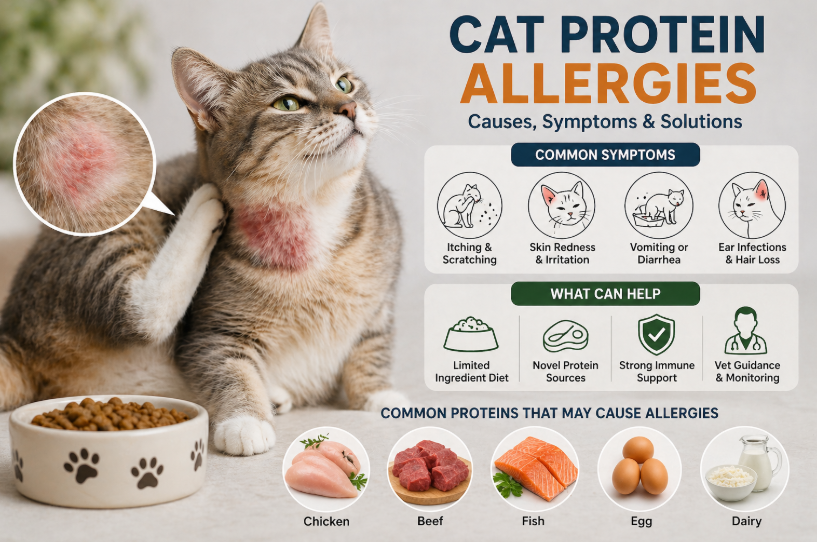
Early detection is crucial when dealing with cat protein allergies, as symptoms can worsen if left untreated. One of the most common signs is persistent itching, especially around the face, ears, and neck. Cats may scratch excessively or groom themselves more than usual, leading to hair loss or skin irritation.
Digestive issues are another key indicator. Vomiting, diarrhea, or frequent stomach upset may suggest that a particular protein is not being tolerated well. While occasional digestive problems can occur, consistent symptoms should not be ignored.
Moreover, some cats develop ear infections or inflamed skin as a result of allergic reactions. These symptoms may seem unrelated at first, but they are often linked to underlying food sensitivities. Therefore, paying close attention to changes in behavior and physical condition can help you identify cat protein allergies before they become severe.
Common Protein Sources That Trigger Reactions
Certain proteins are more likely to cause allergic responses in cats. Chicken is one of the most common culprits, largely because it is widely used in many commercial cat foods. As cats consume it frequently, the likelihood of developing cat protein allergies increases.
Beef is another protein that can trigger reactions, especially in cats that have been exposed to it consistently over time. Similarly, fish-based diets, while popular, can also lead to sensitivities in some cats. Although fish provides beneficial nutrients, overconsumption may increase the risk of allergies.
Dairy, although not a primary protein source for cats, can also contribute to allergic reactions. Many cats are lactose intolerant, which can lead to digestive discomfort and confusion with protein-related issues. Therefore, it is important to evaluate all components of your cat’s diet when investigating cat protein allergies.
How Diet Rotation Can Help Reduce Risk
Diet rotation is a useful strategy for minimizing the risk of developing sensitivities. By varying protein sources, you reduce the chance of overexposure to any single ingredient. This approach can help prevent cat protein allergies from developing in the first place.
For example, alternating between chicken, turkey, and novel proteins like duck or rabbit can provide variety while maintaining balanced nutrition. This not only supports your cat’s dietary needs but also reduces the strain on their immune system.
However, changes should be introduced gradually. Sudden switches can cause digestive upset, which may complicate the situation. Therefore, a slow and steady approach ensures a smoother transition and better results over time.
The Role Of Limited Ingredient Diets
Limited ingredient diets are often recommended for cats with sensitivities. These diets contain fewer components, making it easier to identify potential triggers. When dealing with cat protein allergies, simplifying the diet can provide clarity and relief.
These diets typically focus on a single protein source combined with easily digestible carbohydrates. By eliminating unnecessary additives, they reduce the risk of adverse reactions. As a result, many cats experience improved digestion and reduced symptoms.
In addition, limited ingredient diets are helpful during elimination trials. This process involves feeding your cat a restricted diet for several weeks to determine which protein is causing the issue. Once the trigger is identified, it can be avoided moving forward.
Novel Proteins As A Safe Alternative
Novel proteins are less commonly used in traditional cat foods, which makes them a valuable option for sensitive cats. Ingredients such as venison, duck, or rabbit are often included in diets designed to manage cat protein allergies.
Since these proteins are unfamiliar to the cat’s immune system, they are less likely to trigger a reaction. This provides a safer alternative for cats that cannot tolerate more common ingredients. Over time, incorporating novel proteins can help restore balance and improve overall health.
However, it is important to ensure that these diets remain nutritionally complete. While focusing on a new protein source, your cat still needs all essential nutrients. Therefore, choosing high-quality formulations is key to achieving the best results.
Working With Your Veterinarian For Accurate Diagnosis
Diagnosing cat protein allergies can be challenging without professional guidance. Symptoms often overlap with other conditions, such as parasites or environmental allergies. Therefore, consulting a veterinarian is essential for an accurate assessment.
A vet may recommend an elimination diet or specific tests to identify the cause of the reaction. This process requires patience, as it can take several weeks to see clear results. However, the information gained is invaluable for long-term management.
In addition, your veterinarian can help you create a balanced diet plan tailored to your cat’s needs. This ensures that your cat receives proper nutrition while avoiding problematic ingredients. As a result, professional support plays a crucial role in managing cat protein allergies effectively.
Long-Term Management And Prevention
Managing allergies is not just about removing the trigger; it also involves maintaining a consistent and supportive routine. Once you identify the problematic protein, avoiding it becomes the primary goal. This helps prevent future flare-ups and keeps your cat comfortable.
Consistency in feeding is important, as even small amounts of the allergen can cause reactions. Therefore, checking ingredient labels carefully is essential when choosing food or treats. Over time, maintaining a stable diet reduces the likelihood of recurring issues.
In addition, monitoring your cat’s health regularly can help you catch any changes early. If symptoms return, adjustments can be made quickly to prevent further discomfort. By staying proactive, you can successfully manage cat protein allergies and support your cat’s long-term well-being.
Conclusion
Cat protein allergies can be challenging, but they are manageable with the right knowledge and approach. By understanding the causes, recognizing the symptoms, and making thoughtful dietary choices, you can significantly improve your cat’s quality of life. Although the process may require patience, the results are well worth the effort.
Focusing on high-quality ingredients, rotating protein sources, and working closely with your veterinarian can make a meaningful difference. Over time, these strategies help create a balanced and comfortable lifestyle for your cat. With consistent care and attention, managing cat protein allergies becomes a practical and rewarding part of responsible pet ownership.
FAQ
- What are the most common food triggers in cats?
Common triggers include chicken, beef, and fish, especially when consumed frequently over time. - How can I tell if my cat has a food sensitivity?
Look for signs like itching, digestive issues, or skin irritation that persist over time. - Are grain-free diets helpful for sensitive cats?
They can help in some cases, but protein sources are usually the main cause of reactions. - How long does it take to identify a food allergy?
An elimination diet may take several weeks to clearly identify the trigger. - Can cats outgrow food sensitivities?
Most cats do not outgrow them, so long-term dietary management is usually necessary.