
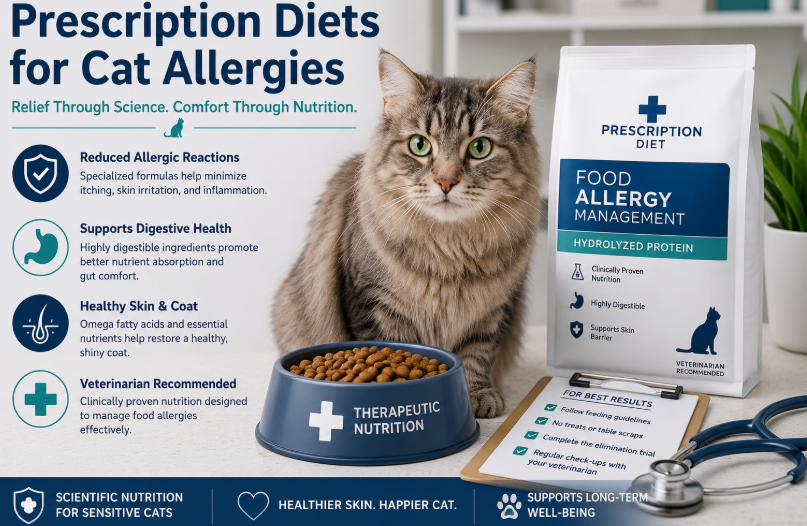
Food allergies can make life uncomfortable for both cats and their owners. Persistent itching, excessive grooming, recurring ear infections, skin irritation, vomiting, and digestive upset often point to an underlying dietary sensitivity. When these symptoms continue despite routine care, veterinarians frequently recommend specialized nutrition plans. Understanding Prescription Diets Cat Allergies options can help owners make informed decisions while supporting their cat’s long-term health and comfort.
Unlike occasional food intolerance, true food allergies involve an immune system response to specific ingredients. Most commonly, cats react to proteins they have consumed repeatedly over time. Consequently, identifying the exact trigger can be challenging. Symptoms often resemble environmental allergies, making diagnosis more complicated. This is why veterinarians frequently use specialized feeding trials and Prescription Diets Cat Allergies programs to identify and manage dietary triggers.
Prescription diets are carefully formulated to reduce allergic reactions while maintaining complete nutrition. These diets use ingredients and manufacturing methods designed specifically for sensitive cats. As a result, they often provide relief when standard commercial foods fail to resolve symptoms.
Although prescription diets require veterinary involvement, they remain one of the most effective tools for managing food-related allergies. Understanding how they work helps owners appreciate their value and use them successfully.
Understanding Food Allergies in Cats
Before discussing Prescription Diets Cat Allergies options, it is important to understand what food allergies actually involve. A food allergy occurs when the immune system mistakenly identifies a food ingredient as harmful and launches an inflammatory response.
Proteins are the most common triggers. Chicken, beef, fish, dairy, and other frequently consumed ingredients may become problematic for certain cats. However, any protein source has the potential to trigger an allergic response.
Symptoms often affect the skin and digestive system. Many cats develop chronic itching around the face, neck, ears, or abdomen. Others experience vomiting, diarrhea, or soft stools. Consequently, symptoms may vary significantly between individuals.
Unlike seasonal allergies, food allergies generally persist year-round because exposure occurs daily. Therefore, symptoms often remain constant unless the offending ingredient is removed.
Diagnosing food allergies requires patience because symptoms overlap with many other conditions. This challenge explains why veterinarians frequently rely on structured elimination diets and specialized Prescription Diets Cat Allergies programs.
Understanding the underlying immune response helps owners appreciate why dietary management remains such an important treatment strategy.
Why Veterinarians Recommend Prescription Diets
Many owners wonder why veterinarians recommend prescription products instead of over-the-counter alternatives. The answer lies in quality control, ingredient consistency, and scientific formulation.
A major advantage of Prescription Diets Cat Allergies products involves strict manufacturing standards. These diets undergo extensive testing to minimize cross-contamination with unwanted proteins.
Cross-contamination can occur when manufacturing facilities process multiple ingredients on shared equipment. Even tiny amounts of an allergen may trigger symptoms in sensitive cats. Consequently, quality control becomes critically important.
Prescription diets also provide complete and balanced nutrition. During elimination trials, veterinarians need confidence that cats receive adequate nutrients while avoiding potential triggers.
Additionally, veterinary diets often rely on scientific research and clinical testing. This evidence-based approach helps ensure effectiveness and safety.
Although some premium commercial foods claim to support sensitive cats, prescription formulas typically offer greater reliability during allergy investigations. Therefore, veterinarians frequently consider them the gold standard for diagnosing and managing food allergies.
Hydrolyzed Protein Diets
Among all Prescription Diets Cat Allergies options, hydrolyzed protein diets remain one of the most commonly recommended choices.
Hydrolyzation involves breaking proteins into extremely small fragments. These fragments become so small that the immune system often fails to recognize them as allergens. As a result, allergic reactions may decrease significantly.
Hydrolyzed diets offer several advantages during elimination trials. Since proteins are modified extensively, previous exposure becomes less relevant. Consequently, veterinarians can use these diets even when a cat has consumed many different proteins throughout its life.
Cats experiencing severe symptoms often benefit from hydrolyzed formulations because they minimize exposure to recognizable allergens while maintaining complete nutrition.
Results typically require several weeks to become noticeable. However, many cats experience meaningful improvements in itching, skin condition, and digestive health once inflammation begins to decrease.
Hydrolyzed products continue to play a central role in Prescription Diets Cat Allergies management because they provide a highly controlled nutritional approach.
Novel Protein Diets
Novel protein diets represent another important category within Prescription Diets Cat Allergies treatment plans.
These diets use protein sources that cats have rarely or never consumed previously. Rabbit, venison, duck, and other less common proteins frequently appear in these formulations.
The concept is relatively simple. If a cat has never encountered a particular protein, the immune system is less likely to react negatively. Consequently, symptoms may improve once exposure to problematic ingredients stops.
Novel protein diets can work exceptionally well when previous dietary history is known. Veterinarians often review feeding records carefully before selecting an appropriate protein source.
However, success depends on strict compliance. Even small amounts of treats or other foods can interfere with results. Therefore, owners must follow feeding instructions carefully throughout the trial period.
Because ingredient selection remains highly controlled, novel protein products continue to serve as valuable Prescription Diets Cat Allergies solutions for many cats.
The Elimination Diet Process
An elimination trial represents the most reliable method for diagnosing food allergies. Consequently, Prescription Diets Cat Allergies programs often begin with this structured process.
During the trial, cats consume only the prescribed diet for a specific period, usually eight to twelve weeks. No treats, table scraps, flavored medications, or unauthorized foods are allowed.
This strict approach helps eliminate potential allergens and allows inflammation to decrease gradually. As symptoms improve, veterinarians gain evidence supporting a food-related cause.
Many owners find elimination trials challenging because consistency is essential. However, the information gained often proves extremely valuable.
If symptoms improve significantly, veterinarians may recommend reintroducing previous ingredients individually. This process helps identify the specific trigger responsible for the allergic reaction.
Although elimination trials require patience, they remain one of the most effective uses of Prescription Diets Cat Allergies management strategies.
Accurate diagnosis often leads to more targeted and successful long-term treatment plans.
Benefits Beyond Allergy Relief
While reducing allergic reactions remains the primary goal, Prescription Diets Cat Allergies products often provide additional benefits.
Many cats experience improved coat quality as inflammation decreases. Reduced scratching allows skin to heal more effectively, resulting in healthier fur and fewer bald patches.
Digestive health frequently improves as well. Cats suffering from food-related gastrointestinal symptoms often develop firmer stools and experience less vomiting.
Better comfort levels may also influence behavior. Cats that no longer feel itchy or uncomfortable often become more active, social, and relaxed.
Some prescription diets include additional nutrients designed to support skin barrier function. These ingredients help strengthen natural defenses and may reduce sensitivity over time.
Improved quality of life remains one of the most rewarding outcomes of successful allergy management. Consequently, many owners report noticeable positive changes after transitioning to appropriate veterinary diets.
Common Mistakes During Allergy Management
Even the best Prescription Diets Cat Allergies plan can fail if common mistakes occur during implementation.
Providing treats remains one of the most frequent problems. Many treats contain proteins capable of triggering allergic reactions and interfering with elimination trials.
Family members sometimes unknowingly offer table scraps or snacks. Therefore, everyone in the household must understand the importance of dietary consistency.
Switching foods too quickly can also create confusion. Some cats require several weeks before meaningful improvements become visible. Patience remains essential throughout the process.
Owners occasionally discontinue the diet prematurely because results seem slow. However, allergic inflammation often takes time to resolve. Consequently, completing the full trial period is important.
Failing to communicate with the veterinarian about symptom changes may also limit success. Regular updates help guide treatment adjustments and improve outcomes.
Avoiding these mistakes increases the likelihood that Prescription Diets Cat Allergies programs will provide clear and reliable results.
Long-Term Feeding Considerations
After identifying food allergies, many cats continue eating specialized diets long term. Fortunately, modern Prescription Diets Cat Allergies products are designed to provide complete nutrition for ongoing use.
Long-term management focuses on avoiding identified triggers while maintaining balanced nutrition. Once symptoms stabilize, many cats enjoy excellent quality of life.
Regular veterinary monitoring remains important. Health needs may change with age, and periodic evaluations help ensure dietary plans remain appropriate.
Some cats eventually tolerate additional foods, while others require permanent dietary restrictions. Consequently, management strategies vary depending on individual responses.
Owners should resist the temptation to experiment unnecessarily with new foods once an effective diet is established. Maintaining consistency often provides the best protection against future flare-ups.
Long-term success depends on commitment, patience, and ongoing collaboration with veterinary professionals.
Conclusion
Prescription Diets Cat Allergies solutions remain among the most effective tools for diagnosing and managing feline food allergies. Through hydrolyzed protein formulas, novel protein diets, and carefully structured elimination trials, veterinarians can identify dietary triggers and help reduce chronic symptoms.
These specialized diets do more than alleviate itching and digestive discomfort. They support healthier skin, improved digestion, and a better overall quality of life. Although the process requires patience and consistency, the benefits often make the effort worthwhile.
Food allergies can be frustrating, but they are manageable with the right approach. By understanding how Prescription Diets Cat Allergies programs work and following veterinary guidance carefully, owners can help their cats enjoy greater comfort, health, and happiness for years to come.
FAQ
1. How long does an elimination diet usually take?
Most elimination trials last between eight and twelve weeks to provide reliable results.
2. What is a hydrolyzed protein diet?
It is a diet that contains proteins broken into very small fragments that are less likely to trigger immune responses.
3. Can treats interfere with allergy testing?
Yes. Even small amounts of unauthorized foods can affect trial results and delay diagnosis.
4. Are veterinary allergy diets safe for long-term feeding?
Most prescription formulas are designed to provide complete and balanced nutrition for extended use.
5. What symptoms suggest a food allergy?
Common signs include chronic itching, excessive grooming, ear problems, vomiting, diarrhea, and skin irritation.