Many cat owners are turning toward natural feeding options because they want greater control over ingredients and overall diet quality. Natural cat food often contains recognizable ingredients, fewer artificial additives, and a focus on animal-based nutrition. However, choosing natural ingredients is only part of the equation. The real challenge is ensuring that a cat receives every nutrient required for lifelong health. Understanding Balanced Natural Cat Nutrition is essential because even high-quality ingredients can fail to provide complete nourishment when they are not combined correctly.
Cats have unique dietary requirements that differ significantly from those of humans and dogs. As obligate carnivores, they depend on nutrients found primarily in animal tissues. Consequently, feeding a natural diet requires careful planning and attention to nutritional balance. While many owners focus on protein quality, cats also need specific vitamins, minerals, fatty acids, and amino acids to thrive.
The popularity of natural feeding continues to grow. However, nutritional deficiencies remain one of the most common concerns associated with improperly formulated diets. Therefore, understanding the principles of Balanced Natural Cat Nutrition helps owners avoid mistakes while supporting long-term wellness.
A truly healthy diet combines quality ingredients with complete nutritional support. By learning how essential nutrients work together, owners can make informed choices that benefit their cats throughout every stage of life.
Why Nutritional Balance Matters More Than Ingredients Alone
Many people assume that natural automatically means healthy. While ingredient quality certainly matters, Balanced Natural Cat Nutrition depends on much more than selecting premium foods.
Cats require specific nutrient ratios to maintain healthy organs, muscles, bones, skin, and immune function. Even diets made from fresh meats can become problematic if they lack important nutrients such as calcium, taurine, or essential vitamins.
For example, feeding only muscle meat may provide protein but fail to deliver adequate calcium. Over time, this imbalance can contribute to serious health problems affecting bones and overall metabolism.
Likewise, excessive supplementation can create complications. Nutritional balance involves providing the right nutrients in appropriate amounts rather than simply adding more ingredients.
Commercial natural foods often undergo formulation to meet established nutritional standards. Homemade diets require additional attention because owners assume responsibility for maintaining proper nutrient levels.
Understanding Balanced Natural Cat Nutrition helps shift the focus from marketing claims to actual dietary requirements. This perspective encourages healthier feeding decisions and supports long-term feline well-being.
The Role of High-Quality Animal Protein
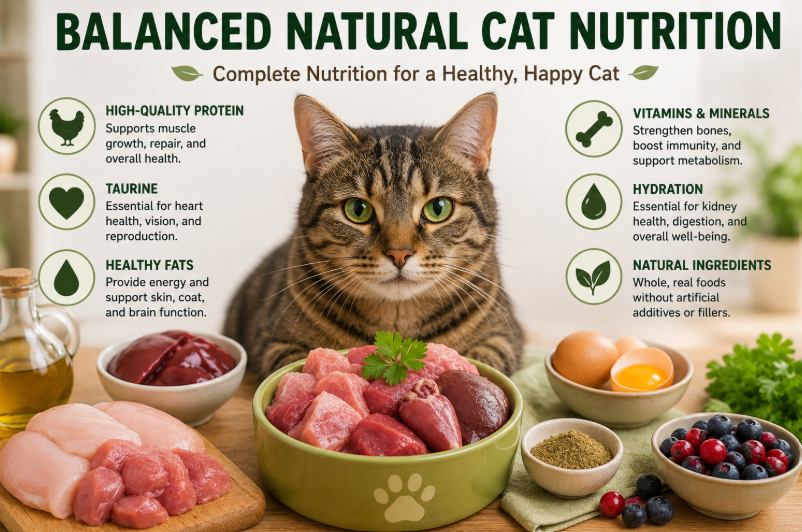
Protein serves as the foundation of Balanced Natural Cat Nutrition because cats rely heavily on animal-based nutrients for survival. Unlike omnivores, cats have evolved to obtain much of their nutritional support from meat.
Protein supports muscle maintenance, tissue repair, immune function, hormone production, and countless metabolic processes. Consequently, inadequate protein intake can affect multiple aspects of health.
Animal proteins typically provide amino acid profiles that align closely with feline requirements. Chicken, turkey, rabbit, beef, duck, and fish often appear in high-quality natural diets because they supply essential nutrients efficiently.
Protein quality matters as much as quantity. Highly digestible animal proteins allow cats to absorb nutrients more effectively. Therefore, selecting quality sources supports better nutritional outcomes.
While protein remains critical, Balanced Natural Cat Nutrition also requires additional nutrients that protein alone cannot provide. A complete diet combines adequate protein with other essential dietary components.
Owners should view protein as the nutritional foundation rather than the entire structure. Every other nutrient works alongside protein to support optimal health.
Why Taurine Is Essential
Among all nutrients involved in Balanced Natural Cat Nutrition, taurine deserves special attention. This amino acid plays a crucial role in heart function, vision, reproduction, and nervous system health.
Unlike many other animals, cats cannot produce sufficient taurine on their own. Therefore, they must obtain it through dietary sources.
Animal tissues naturally contain taurine, particularly organs and certain muscle meats. However, improper food preparation or unbalanced recipes may reduce taurine availability.
Taurine deficiency can lead to serious health problems over time. Heart disease, vision impairment, and reproductive difficulties may occur when cats fail to receive adequate amounts.
Because symptoms often develop gradually, deficiencies may remain unnoticed until significant damage occurs. Consequently, ensuring consistent taurine intake remains a critical component of Balanced Natural Cat Nutrition.
Commercial diets formulated according to recognized standards generally contain sufficient taurine. Homemade diets require careful planning to ensure appropriate levels are maintained consistently.
Protecting taurine intake helps support healthy body systems while reducing the risk of preventable nutritional disorders.
Healthy Fats and Their Importance
Fats provide another essential component of Balanced Natural Cat Nutrition. These nutrients supply concentrated energy while supporting numerous biological functions.
Healthy fats contribute to skin health, coat quality, brain function, hormone production, and nutrient absorption. Consequently, cats require adequate fat intake throughout life.
Omega-3 and omega-6 fatty acids deserve particular attention. These fats help support healthy inflammatory responses and maintain skin integrity. Many natural diets include fish oils or other sources of beneficial fatty acids.
Fat also improves food palatability. Cats often find foods containing appropriate fat levels more appealing, which supports consistent eating habits.
However, balance remains important. Excessive fat intake may contribute to weight gain, while insufficient fat can affect coat condition and energy levels.
Proper fat inclusion supports the broader goals of Balanced Natural Cat Nutrition by helping maintain both physical health and dietary satisfaction.
The Critical Role of Vitamins and Minerals
Protein and fat alone cannot create Balanced Natural Cat Nutrition. Vitamins and minerals perform countless functions that support growth, metabolism, immunity, and cellular health.
Calcium and phosphorus help maintain strong bones and teeth. However, these minerals must remain properly balanced. Excesses or deficiencies can negatively affect skeletal health.
Vitamin A supports vision, immune function, and skin health. Cats require preformed vitamin A from animal sources because they cannot convert plant carotenoids efficiently.
B vitamins contribute to energy metabolism and nervous system function. Likewise, minerals such as zinc, iron, copper, and selenium support numerous physiological processes.
Deficiencies often develop slowly. Consequently, owners may not recognize problems until symptoms become more severe. This reality highlights the importance of comprehensive dietary planning.
Achieving Balanced Natural Cat Nutrition means providing all essential vitamins and minerals in appropriate amounts rather than focusing exclusively on major nutrients such as protein.
A complete nutritional profile helps support long-term health while reducing the risk of diet-related complications.
Hydration and Natural Feeding
Water plays a significant role in Balanced Natural Cat Nutrition. Although hydration is not technically a nutrient, it remains essential for nearly every bodily function.
Cats evolved from desert-dwelling ancestors and naturally obtain much of their moisture through food. Consequently, many natural feeding advocates emphasize moisture-rich diets.
Wet foods often contain substantially more water than dry alternatives. This additional moisture supports urinary health, kidney function, and overall hydration status.
Proper hydration may also help reduce the risk of certain urinary tract issues. Therefore, water intake deserves careful consideration when planning a feeding strategy.
Fresh water should always remain available regardless of diet type. Some cats prefer fountains because moving water encourages drinking.
Hydration supports digestion, circulation, temperature regulation, and waste removal. As a result, maintaining adequate fluid intake complements every other aspect of Balanced Natural Cat Nutrition.
Combining moisture-rich foods with easy access to fresh water creates a strong foundation for overall wellness.
Avoiding Common Nutritional Mistakes
Many well-intentioned owners unknowingly make mistakes when pursuing Balanced Natural Cat Nutrition. Understanding these common errors helps prevent avoidable health concerns.
One frequent mistake involves relying on recipes that lack professional formulation. Online recipes often appear appealing but may fail to provide complete nutrition.
Another issue involves overemphasizing certain ingredients. Feeding excessive amounts of liver, for example, may create vitamin imbalances. Similarly, muscle meat alone does not provide all required nutrients.
Supplement misuse also presents risks. More is not always better when it comes to vitamins and minerals. Excessive supplementation can sometimes create problems equal to or greater than deficiencies.
Sudden dietary changes may cause digestive upset. Therefore, transitions should occur gradually whenever possible.
Monitoring body condition remains important as well. Weight changes can indicate nutritional imbalances or inappropriate calorie intake.
Avoiding these mistakes helps ensure that Balanced Natural Cat Nutrition remains both safe and effective.
Working With Veterinary Professionals
Professional guidance provides valuable support when implementing Balanced Natural Cat Nutrition. Veterinarians and veterinary nutritionists help ensure dietary plans meet established nutritional requirements.
This guidance becomes especially important for kittens, senior cats, pregnant females, and pets with medical conditions. These groups often have specialized nutritional needs.
Regular wellness examinations allow professionals to monitor body condition, health status, and dietary effectiveness. Consequently, adjustments can be made before problems develop.
Veterinary nutritionists can formulate homemade diets that provide complete nutritional support. This approach reduces the risk of deficiencies while maintaining the benefits of natural feeding.
Collaboration between owners and professionals often produces the best outcomes. Owners provide daily observations, while experts contribute scientific knowledge and nutritional expertise.
Achieving Balanced Natural Cat Nutrition becomes much easier when supported by evidence-based recommendations and ongoing monitoring.
Conclusion
Balanced Natural Cat Nutrition involves much more than selecting natural ingredients. True nutritional success depends on providing the correct balance of protein, taurine, fats, vitamins, minerals, and hydration in forms that support feline health.
While natural feeding offers many potential benefits, nutritional completeness must always remain the top priority. High-quality ingredients provide a strong foundation, but they cannot replace careful dietary planning and balance.
Understanding feline nutritional requirements empowers owners to make informed decisions that support lifelong wellness. Whether feeding commercial natural foods or preparing homemade meals, attention to nutritional balance helps prevent deficiencies and promotes optimal health.
By focusing on the principles of Balanced Natural Cat Nutrition, owners can create feeding plans that support strong muscles, healthy organs, vibrant coats, and long-term vitality. A balanced approach ensures that natural feeding remains both safe and beneficial for every stage of a cat’s life.
FAQ
1. Why is taurine so important for cats?
Taurine supports heart health, vision, reproduction, and nervous system function.
2. Can homemade diets provide complete nutrition?
Yes, but they require careful formulation to ensure all nutrient requirements are met.
3. Do cats need carbohydrates to survive?
Cats primarily rely on animal-based nutrients and have lower carbohydrate requirements than many other species.
4. How does moisture benefit feline health?
Moisture supports hydration, kidney function, urinary health, and overall wellness.
5. Should I consult a veterinarian before changing diets?
Yes. Professional guidance helps ensure nutritional balance and supports safe dietary transitions.