
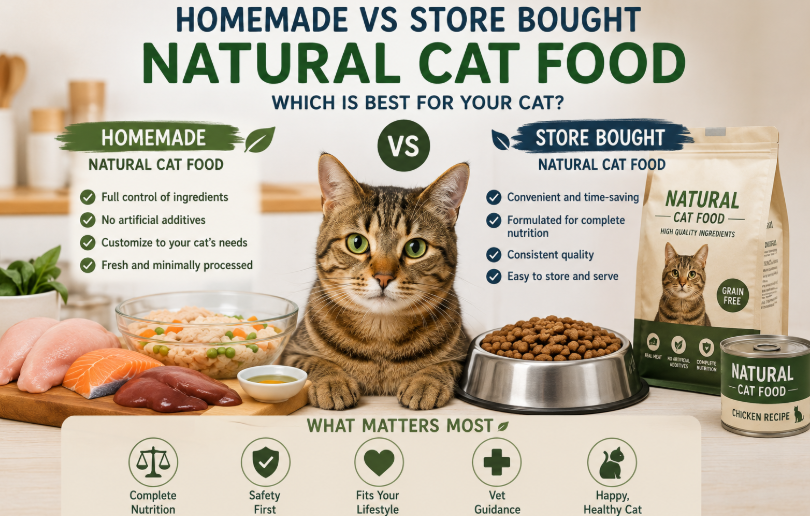
Choosing the right diet for a cat can feel overwhelming. Pet owners encounter countless feeding philosophies, ingredient claims, and nutritional recommendations. Among the most debated topics is whether homemade meals are better than commercial options. A thorough Natural Cat Food Comparison helps owners understand the advantages and limitations of both approaches while focusing on what truly matters: balanced nutrition and long-term health.
Cats have unique dietary requirements that differ significantly from those of humans and dogs. As obligate carnivores, they depend on animal-based nutrients to survive and thrive. Consequently, any feeding plan must provide adequate protein, essential amino acids, healthy fats, vitamins, and minerals. While both homemade and store bought diets can potentially meet these needs, each approach presents distinct challenges and benefits.
The growing interest in natural feeding has encouraged many owners to prepare meals at home. At the same time, commercial manufacturers continue developing products designed to appeal to health-conscious consumers. Therefore, conducting a careful Natural Cat Food Comparison allows owners to evaluate these options based on evidence rather than marketing claims or trends.
Before selecting a feeding strategy, it is important to understand how each option affects nutrition, convenience, safety, cost, and overall feline well-being.
Understanding What Natural Cat Food Means
The term natural often creates confusion because it lacks a single universally accepted definition. Some people define natural food as minimally processed ingredients. Others associate it with diets that resemble what wild cats might consume.
When discussing a Natural Cat Food Comparison, veterinarians typically focus less on labels and more on nutritional quality. A diet may contain natural ingredients yet still fail to provide complete nutrition. Conversely, a commercial food can undergo processing while still delivering excellent nutritional balance.
Natural feeding generally emphasizes recognizable ingredients, limited artificial additives, and high-quality protein sources. However, ingredient quality alone does not determine whether a diet adequately supports feline health.
Cats require nutrients rather than specific marketing terms. Therefore, evaluating any diet should involve examining its nutritional completeness, digestibility, and ability to meet established dietary requirements.
Understanding this distinction helps owners avoid common misconceptions. The healthiest choice is not necessarily the most natural-looking option. Instead, the best diet consistently provides balanced nutrition while supporting a cat’s individual needs.
The Appeal of Homemade Diets
Many owners feel drawn to homemade meals because they provide greater control over ingredients. Preparing food at home allows people to select specific protein sources, avoid certain additives, and customize recipes according to personal preferences.
A key benefit highlighted during any Natural Cat Food Comparison is transparency. Owners know exactly what ingredients enter each meal. This level of control appeals to those concerned about preservatives, fillers, or ingredient sourcing.
Homemade diets can also accommodate certain dietary restrictions. Cats with food sensitivities may benefit from carefully selected ingredients that avoid specific triggers.
Some owners enjoy the process of preparing meals for their pets. They view homemade feeding as an extension of the care they already provide through regular grooming, exercise, and veterinary visits.
Additionally, fresh ingredients often appear more appealing than highly processed foods. Consequently, many people assume homemade meals automatically offer superior nutrition.
However, appearance and ingredient quality alone do not guarantee a balanced diet. Nutritional adequacy remains the most important consideration when evaluating homemade feeding plans.
The Challenges of Homemade Feeding
While homemade diets offer certain advantages, they also present significant challenges. A complete Natural Cat Food Comparison must address these concerns honestly.
The most common issue involves nutritional imbalance. Cats require precise amounts of nutrients such as taurine, calcium, phosphorus, vitamin A, and essential fatty acids. Even minor deficiencies can cause serious health problems over time.
Many homemade recipes found online fail to meet established nutritional standards. Consequently, owners who rely on unverified recipes may unintentionally create deficiencies.
Food safety presents another concern. Improper food handling increases the risk of bacterial contamination. Raw ingredients require particular attention because harmful pathogens can affect both pets and humans.
Preparing balanced meals also demands time and consistency. Owners must source ingredients, follow recipes carefully, and monitor nutritional content. As a result, homemade feeding often requires greater effort than commercial alternatives.
During a Natural Cat Food Comparison, veterinarians frequently emphasize that homemade diets should ideally be formulated with professional guidance. This approach helps ensure nutritional completeness while reducing potential risks.
Without careful planning, homemade feeding can create more problems than benefits despite good intentions.
Why Many Owners Choose Store Bought Diets
Commercial cat foods remain the most common feeding option for several reasons. Convenience ranks among the most obvious benefits. Owners can provide complete meals without spending significant time on preparation.
A thorough Natural Cat Food Comparison reveals that reputable commercial diets undergo extensive formulation and testing. Many manufacturers employ veterinary nutritionists who design recipes to meet established nutritional requirements.
Quality commercial foods also offer consistency. Each serving contains the same nutrient profile, making it easier to provide balanced nutrition over time.
Modern pet food companies increasingly produce natural-focused formulas featuring premium ingredients, limited additives, and high-protein recipes. Consequently, owners can often find products that align with their preferences without sacrificing convenience.
Commercial diets also simplify feeding routines. Busy households may find it easier to maintain consistency when meals require minimal preparation.
Availability represents another advantage. Most pet owners can purchase high-quality commercial foods through local retailers or online suppliers. This accessibility makes maintaining a stable feeding plan more practical.
Evaluating Ingredient Quality in Commercial Foods
Not all store bought products offer the same level of quality. Therefore, ingredient evaluation remains an important part of any Natural Cat Food Comparison.
High-quality commercial diets typically list named animal proteins among their primary ingredients. Chicken, turkey, salmon, duck, and rabbit frequently appear in premium formulations.
Owners should examine ingredient labels carefully. Protein quality often matters more than marketing claims. Products that emphasize animal-based nutrition generally align more closely with feline dietary needs.
Transparency also deserves attention. Manufacturers that openly discuss sourcing, quality control, and nutritional standards often demonstrate greater accountability.
Wet foods frequently provide additional benefits due to their moisture content. Since cats naturally consume much of their water through food, moisture-rich diets can support hydration and urinary health.
Understanding labels helps owners identify products that deliver meaningful nutritional value rather than relying solely on appealing packaging or advertising language.
Consequently, informed consumers can make better choices during a Natural Cat Food Comparison and select products that support long-term health.
Comparing Costs and Long-Term Value
Cost often influences feeding decisions. At first glance, homemade meals may appear less expensive because owners purchase raw ingredients directly. However, the full financial picture can be more complicated.
A balanced Natural Cat Food Comparison should include ingredient costs, supplements, preparation time, storage requirements, and potential waste. Homemade diets frequently require specialized ingredients and nutritional supplements that increase overall expenses.
Commercial foods vary significantly in price. Premium natural products typically cost more than basic formulas. Nevertheless, they provide convenience and nutritional consistency that many owners value.
Time also carries value. Preparing meals, monitoring nutrient levels, and maintaining food safety standards require ongoing effort. Consequently, homemade feeding may involve hidden costs beyond grocery expenses.
Veterinary costs deserve consideration as well. Nutritional deficiencies resulting from poorly balanced homemade diets can lead to health issues requiring treatment.
While cost matters, nutritional quality and safety should remain the primary priorities. The least expensive option does not always provide the best value over the long term.
Which Option Do Veterinarians Prefer
Veterinarians generally focus on nutritional adequacy rather than feeding philosophy. A professional Natural Cat Food Comparison emphasizes balance, safety, and consistency above all else.
Many veterinarians support commercial diets because they offer predictable nutrient profiles and undergo extensive testing. These foods provide a practical way to meet feline nutritional requirements consistently.
At the same time, veterinarians do not necessarily oppose homemade feeding. However, they typically recommend working with qualified nutrition professionals to formulate balanced recipes.
Veterinary guidance becomes especially important for kittens, senior cats, and pets with medical conditions. These animals often require specific nutritional adjustments that can be difficult to achieve without professional support.
The goal is not to promote one approach universally. Instead, veterinarians aim to ensure that whichever diet owners choose provides complete and balanced nutrition.
Ultimately, a successful feeding plan supports overall health, maintains appropriate body condition, and meets a cat’s individual needs.
Finding the Best Choice for Your Cat
Every cat differs in terms of age, health status, activity level, and dietary preferences. Therefore, the ideal feeding strategy varies between households.
A thoughtful Natural Cat Food Comparison encourages owners to evaluate practical considerations alongside nutritional goals. Some people enjoy preparing meals and have the time required to do so safely. Others prefer the convenience and consistency of commercial products.
Cats with medical conditions may require specialized diets that influence feeding decisions. Likewise, lifestyle factors often determine what remains sustainable over the long term.
Consistency matters regardless of the chosen approach. Sudden dietary changes can upset digestion and create unnecessary stress. Therefore, transitions should occur gradually whenever possible.
Regular veterinary evaluations help ensure that any feeding plan continues meeting a cat’s nutritional needs. Ongoing monitoring provides valuable insights into overall health and dietary effectiveness.
Conclusion
A comprehensive Natural Cat Food Comparison reveals that both homemade and store bought diets offer potential benefits and challenges. Homemade feeding provides ingredient control and customization opportunities, while commercial foods offer convenience, consistency, and professionally formulated nutrition.
The healthiest option depends on how well the diet meets feline nutritional requirements. High-quality ingredients matter, but balanced nutrition remains the most important factor. Consequently, owners should focus on nutritional adequacy rather than marketing claims alone.
Whether choosing homemade meals or premium commercial products, the ultimate goal remains the same: providing safe, complete, and nourishing food that supports long-term health. By making informed decisions and seeking professional guidance when necessary, cat owners can create feeding plans that help their pets thrive.
FAQ
1. Is homemade food always healthier than commercial food?
No. Homemade meals can be nutritious, but they require careful formulation to remain balanced.
2. Why do veterinarians often recommend commercial diets?
Commercial foods provide consistent nutrition and undergo testing to meet established dietary standards.
3. Can natural ingredients improve feline health?
Quality ingredients can support health when they form part of a balanced nutritional plan.
4. Are raw homemade diets safe for cats?
Raw diets carry food safety risks and require careful handling and nutritional planning.
5. How can I choose the right feeding approach?
Consider your cat’s needs, your lifestyle, nutritional balance, and veterinary recommendations.