When cat owners search for healthier feeding options, they often encounter countless opinions about nutrition. Social media, pet forums, and marketing campaigns regularly promote various feeding philosophies. Some recommend raw feeding, while others advocate homemade meals or grain-free products. Amid all this information, many owners wonder what veterinary professionals actually recommend. Understanding the facts behind Natural Cat Diets can help separate evidence-based guidance from popular trends.
Cats have unique nutritional needs that differ significantly from those of humans and even dogs. As obligate carnivores, they depend heavily on animal-based nutrients to maintain health. Their bodies require specific amino acids, fatty acids, vitamins, and minerals that come primarily from animal tissues. Therefore, any discussion about Natural Cat Diets must begin with an understanding of feline biology.
Veterinarians generally focus on nutritional balance rather than marketing labels. While natural ingredients can be beneficial, the overall nutritional profile remains far more important than whether a product appears trendy or unconventional. Consequently, the best feeding plan often combines high-quality ingredients with scientifically balanced nutrition.
Interest in natural nutrition continues to grow because many owners want to provide the best possible care for their pets. However, natural feeding means different things to different people. For some, it means minimally processed food. For others, it refers to diets that mimic what wild cats might consume. Understanding these interpretations helps explain why discussions about feline nutrition often become complicated.
What Makes a Diet Natural for Cats
The term natural lacks a single universal definition. In the pet food industry, it generally refers to products made from ingredients derived from plant, animal, or mineral sources with limited chemical processing. However, a natural label alone does not guarantee superior nutrition.
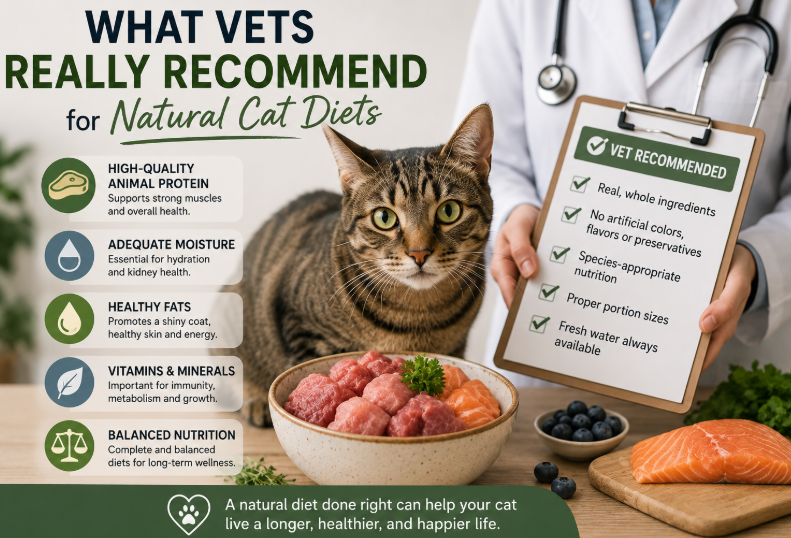
When veterinarians discuss Natural Cat Diets, they typically emphasize foods that align with feline nutritional requirements. This means prioritizing animal protein, healthy fats, moisture, and balanced nutrient levels. Rather than focusing solely on labels, professionals examine ingredient quality and overall formulation.
Wild cats consume prey that provides protein, fat, moisture, and essential nutrients. Although domestic cats live very different lives, their nutritional needs remain remarkably similar. Therefore, diets that emphasize animal-based nutrition often align more closely with natural feline requirements.
At the same time, veterinarians recognize that modern pet food offers advantages that wild diets cannot provide. Commercial formulas undergo testing and quality control procedures designed to ensure nutritional completeness. As a result, natural feeding should focus on nutritional quality rather than attempting to replicate wild feeding conditions exactly.
Many misconceptions arise because people assume natural automatically means healthier. However, balance remains the most important factor. Even natural ingredients can create deficiencies if they do not provide complete nutrition.
The Importance of High-Quality Animal Protein
Protein serves as the foundation of all effective Natural Cat Diets. Cats rely on protein for muscle maintenance, tissue repair, immune support, and countless metabolic functions. Unlike some species, cats have a limited ability to adapt to low-protein diets.
Veterinarians often recommend foods that list animal proteins as the primary ingredients. Chicken, turkey, salmon, rabbit, duck, and other quality protein sources provide essential amino acids that cats require daily.
Taurine deserves special attention because cats cannot produce adequate amounts on their own. This amino acid supports heart function, vision, and overall health. Animal tissues naturally contain taurine, making high-quality protein sources especially important.
Protein quality matters just as much as quantity. Highly digestible animal proteins allow cats to absorb nutrients efficiently. Consequently, veterinarians often prioritize ingredient quality over marketing claims.
Owners evaluating Natural Cat Diets should examine ingredient lists carefully. Named animal proteins generally provide more nutritional value than vague or heavily processed alternatives. This approach helps ensure cats receive the nutrients they need for long-term wellness.
A protein-rich diet also supports healthy body composition. Cats naturally use protein as a primary energy source, making it an essential component of balanced nutrition throughout every life stage.
Why Moisture Matters More Than Many Owners Realize
One aspect of feline nutrition that veterinarians frequently emphasize is hydration. Cats evolved from desert-dwelling ancestors and developed a relatively low thirst drive. As a result, many cats do not drink enough water on their own.
This is one reason many veterinary professionals recommend incorporating wet food into Natural Cat Diets. Moisture-rich foods help support hydration while contributing to urinary tract health and kidney function.
Wild prey contains significant water content. Therefore, moisture-rich feeding more closely resembles the natural way cats consume nutrients. While dry food can still play a role in some feeding plans, moisture remains an important consideration.
Hydration influences many aspects of health. Proper water intake supports digestion, circulation, temperature regulation, and organ function. Consequently, veterinarians often encourage owners to provide multiple sources of moisture throughout the day.
Water fountains, wet food, and fresh water stations can all help increase fluid consumption. These simple strategies often support overall wellness while complementing other aspects of Natural Cat Diets.
Owners sometimes focus heavily on ingredients while overlooking hydration. However, moisture may be one of the most important nutritional factors for long-term feline health.
Understanding Healthy Fats and Essential Nutrients
Fats provide another critical component of Natural Cat Diets. Healthy fats supply energy, support skin health, aid nutrient absorption, and contribute to brain function. They also improve food palatability, making meals more appealing to cats.
Omega-3 and omega-6 fatty acids play particularly important roles. These nutrients help maintain healthy skin and coats while supporting normal inflammatory responses. Fish oil often serves as a valuable source of beneficial fatty acids.
Veterinarians also emphasize the importance of vitamins and minerals. Although protein receives much of the attention, cats require a wide range of nutrients to maintain health. Calcium, phosphorus, zinc, vitamin A, vitamin E, and B vitamins all contribute to essential bodily functions.
Balanced nutrition ensures these nutrients remain available in appropriate amounts. Consequently, veterinarians often caution against feeding unbalanced homemade diets without professional guidance.
The goal of Natural Cat Diets is not simply to provide natural ingredients. Instead, the objective is to deliver complete and balanced nutrition through high-quality food sources. This distinction remains important when evaluating different feeding approaches.
Because nutrient interactions can be complex, carefully formulated diets often provide greater nutritional reliability than improvised feeding plans.
What Vets Think About Raw and Homemade Feeding
Raw feeding generates significant interest among cat owners seeking Natural Cat Diets. Supporters often argue that uncooked foods resemble ancestral diets more closely than commercial products. Some owners report improvements in coat quality, digestion, and energy levels.
However, veterinarians approach raw feeding cautiously. Food safety concerns remain a primary issue because raw meat can contain harmful bacteria. These pathogens may affect both pets and people within the household.
Nutritional balance presents another challenge. Creating complete homemade meals requires careful planning and extensive nutritional knowledge. Without proper formulation, deficiencies or imbalances may develop over time.
Many veterinarians support homemade feeding only when owners work closely with qualified nutrition professionals. This approach helps ensure cats receive appropriate nutrient levels while minimizing risks.
When discussing Natural Cat Diets, veterinary professionals generally prioritize safety, balance, and nutritional adequacy over feeding philosophy alone. Their primary goal is supporting long-term health rather than following trends.
Commercial diets formulated by reputable manufacturers often provide a practical solution because they combine convenience with nutritional completeness. Therefore, many veterinarians consider them appropriate options for most households.
Reading Labels Like a Veterinarian
Understanding pet food labels can help owners make better choices. Veterinarians often recommend looking beyond marketing language and focusing on ingredient quality and nutritional information.
When evaluating Natural Cat Diets, the first ingredients should ideally include named animal proteins. This indicates that protein-rich ingredients form a substantial portion of the formula.
Owners should also verify that products meet established nutritional standards for complete and balanced diets. These standards help ensure cats receive essential nutrients in appropriate amounts.
Ingredient lists provide valuable information, but they do not tell the entire story. Nutrient composition, digestibility, and manufacturing quality all influence a food’s overall value. Therefore, veterinarians evaluate multiple factors before recommending products.
Transparency also matters. Companies that openly discuss ingredient sourcing, quality control, and nutritional research often demonstrate greater commitment to product quality.
Marketing terms can sometimes create confusion. As a result, veterinary guidance remains valuable when comparing feeding options and selecting appropriate products.
Building a Sustainable Feeding Plan
The best feeding strategy is one that supports long-term health while fitting comfortably into daily life. Consistency plays an important role because sudden dietary changes can disrupt digestion and create unnecessary stress.
Veterinarians often recommend introducing new foods gradually. This allows cats to adjust comfortably while minimizing digestive upset. Transition periods typically last several days to a few weeks.
Owners interested in Natural Cat Diets should focus on realistic, sustainable improvements rather than dramatic changes. Small adjustments often produce meaningful benefits over time.
Routine veterinary checkups also contribute to successful nutrition plans. Regular evaluations help monitor body condition, weight, hydration, and overall health. These assessments provide valuable feedback about whether a diet is meeting a cat’s needs.
Every cat is unique. Age, activity level, medical history, and lifestyle all influence nutritional requirements. Therefore, personalized feeding plans often deliver the best outcomes.
Conclusion
Veterinarians generally agree that successful Natural Cat Diets focus on nutritional balance rather than marketing trends. High-quality animal protein, healthy fats, adequate moisture, and complete nutrient profiles form the foundation of healthy feline nutrition.
While natural ingredients can play an important role, overall dietary quality remains the most important consideration. Cats thrive when they receive balanced nutrition that supports their unique biological needs. Consequently, veterinarians prioritize evidence-based recommendations over popular feeding philosophies.
By focusing on quality ingredients, proper hydration, and balanced nutrient intake, owners can make informed choices that support lifelong health. Whether feeding commercial food, wet food, or carefully formulated alternatives, the ultimate goal remains the same: providing safe, complete, and nourishing meals that help cats live long and healthy lives.
FAQ
1. Do veterinarians recommend high-protein diets for cats?
Yes. Most veterinarians recommend protein-rich diets because cats are obligate carnivores.
2. Is wet food beneficial for feline health?
Yes. Wet food provides valuable moisture that supports hydration and urinary tract health.
3. Are homemade meals always healthier than commercial food?
Not necessarily. Homemade diets require careful formulation to ensure complete nutrition.
4. What ingredient should appear first on a cat food label?
A named animal protein source is generally considered an excellent first ingredient.
5. Can natural nutrition support long-term wellness?
Yes. Balanced diets with quality ingredients can help support overall health and longevity.