Keeping a cat entertained can be challenging, especially for indoor pets that spend most of their lives inside the home. While cats enjoy long naps and quiet moments, they also need opportunities to exercise their minds and bodies. Without enough stimulation, boredom can quickly develop. This is why Interactive Cat Toys have become essential tools for modern cat owners who want to support their pet’s physical and mental well-being.
Cats are natural hunters. Even the most relaxed house cat still possesses instincts that encourage stalking, chasing, pouncing, and problem-solving. In the wild, felines spend significant portions of their day searching for food and exploring their environment. Indoor living provides safety and comfort, yet it can reduce opportunities for natural behaviors. Fortunately, the right toys can help recreate many of these experiences while keeping cats active and engaged.
Many behavioral issues stem from boredom. Excessive meowing, destructive scratching, overgrooming, and nighttime activity can sometimes result from a lack of stimulation. Therefore, introducing Interactive Cat Toys into a cat’s routine can provide both entertainment and enrichment. These toys encourage movement, challenge the mind, and help satisfy natural instincts in a safe environment.
Cats thrive when they have opportunities to solve problems. Unlike passive toys that simply sit on the floor, interactive options require participation. They encourage curiosity and reward exploration. As a result, cats often remain interested in these toys for longer periods.
Mental stimulation is just as important as physical exercise. A cat that regularly uses its brain tends to remain more engaged and confident. Furthermore, interactive play can help reduce stress and improve overall happiness. This is especially important for indoor cats that may have fewer opportunities to explore new environments.
The best Interactive Cat Toys combine movement, unpredictability, and rewards. Whether a toy moves on its own or requires a cat to uncover hidden treats, the goal is to create an experience that mimics natural hunting behavior. This keeps play sessions exciting while preventing boredom.
Owners often notice positive changes when enrichment becomes part of a cat’s daily routine. Cats may appear more relaxed, sleep better, and display fewer unwanted behaviors. Consequently, interactive play benefits both pets and their owners.
Why Interactive Play Matters for Indoor Cats
Indoor cats live longer and generally face fewer risks than outdoor cats. However, indoor living can sometimes limit opportunities for exploration and exercise. Because of this, enrichment becomes especially important.
Interactive play provides an outlet for natural instincts. Chasing a moving toy allows a cat to practice hunting skills in a safe and controlled way. Similarly, puzzle toys encourage problem-solving and reward persistence. These activities help prevent boredom while promoting healthy mental engagement.
Physical activity also supports weight management. Obesity remains a common concern among indoor cats. Regular play sessions help burn calories while maintaining muscle tone and flexibility. Therefore, many veterinarians recommend incorporating Interactive Cat Toys into a cat’s daily routine.
Beyond physical benefits, play strengthens the bond between cats and their owners. Shared activities create positive experiences and encourage trust. Even short play sessions can make a meaningful difference in a cat’s quality of life.
Interactive toys also help multi-cat households. They provide stimulation that can reduce competition and redirect excess energy. As a result, cats often interact more peacefully when their enrichment needs are met consistently.
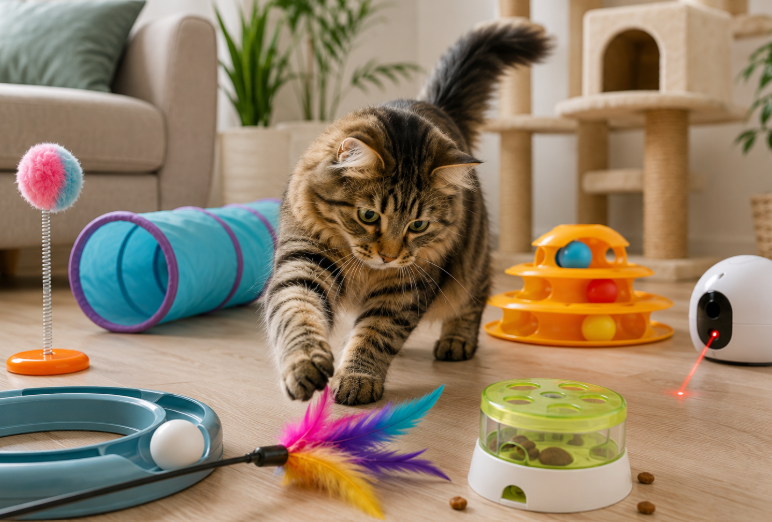
One of the most popular categories includes wand toys. These toys feature feathers, ribbons, or other attachments that mimic prey movement. Because owners control the motion, they can create unpredictable patterns that trigger hunting instincts.
Cats often respond enthusiastically to wand toys because the movement feels realistic. Quick changes in direction encourage stalking and pouncing. Additionally, these toys allow owners to participate directly in play sessions.
Another favorite category involves puzzle feeders. These products combine food rewards with mental challenges. Instead of receiving meals from a standard bowl, cats must work to access treats or kibble. This process encourages natural foraging behavior while slowing down eating.
Many experts consider puzzle feeders among the most effective Interactive Cat Toys because they engage both the mind and body. Cats remain occupied while earning rewards, creating a satisfying and enriching experience.
Popular Types of Toys That Keep Cats Interested
Electronic toys have become increasingly popular in recent years. These devices often move automatically, flash lights, or change direction unexpectedly. Since unpredictability is a key element of hunting behavior, many cats find these toys highly engaging.
Motion-activated toys are particularly useful when owners are away from home. They provide entertainment while encouraging movement throughout the day. Some models even turn on only when a cat approaches, helping maintain interest over time.
Ball track systems represent another excellent option. These toys feature enclosed tracks with rolling balls that cats can bat and chase. Although simple, the constant movement keeps many cats entertained for extended periods.
Laser toys also remain popular. They encourage running, jumping, and quick directional changes. However, experts recommend ending laser sessions with a physical toy or treat. This allows cats to experience a sense of accomplishment after the chase.
The variety available today ensures there are Interactive Cat Toys suitable for every personality. Some cats prefer active chasing games, while others enjoy slower-paced puzzles and problem-solving activities.
Cat tunnels provide another valuable form of enrichment. These structures encourage exploration, hiding, and ambush play. Many cats enjoy moving through tunnels while stalking toys or interacting with other pets.
Likewise, climbing toys and activity centers allow cats to observe their surroundings from elevated positions. Since cats naturally enjoy high vantage points, these products can significantly enhance indoor environments.
Treat-dispensing toys continue to gain popularity because they combine reward-based learning with physical activity. Cats must push, roll, or manipulate the toy to release treats. This process encourages persistence while keeping play sessions engaging.
Because cats have unique preferences, rotating toys regularly helps maintain interest. Even the most effective Interactive Cat Toys can become less exciting if available every day without variation. Rotating options every week often renews curiosity and enthusiasm.
Choosing the Right Toy for Your Cat’s Personality
Every cat has a distinct personality. Therefore, selecting the right toy requires understanding individual preferences. Some cats display strong hunting instincts and enjoy fast-moving toys. Others prefer slower activities that involve investigation and problem-solving.
Kittens often benefit from energetic toys that encourage running and jumping. Their natural curiosity makes them eager to explore new experiences. Consequently, a variety of textures, sounds, and movements can help keep them entertained.
Adult cats may develop specific preferences over time. Some become passionate about chasing feathers, while others prefer puzzle challenges. Observing a cat’s behavior during play can provide valuable clues about what types of toys will be most successful.
Senior cats also benefit from enrichment. Although they may not engage in intense physical activity, gentle Interactive Cat Toys can support mental stimulation and mobility. Soft movement toys and easy puzzle feeders often work particularly well for older felines.
Safety should always remain a priority. Owners should choose durable products made from pet-safe materials. Regular inspection helps ensure toys remain in good condition and free from loose parts.
Interactive play should not replace human interaction. Instead, toys should complement daily engagement between owners and their pets. Combining independent toys with shared play sessions creates the most enriching experience.
Many cat behavior specialists recommend scheduling regular play sessions. Consistency helps establish healthy routines while providing predictable opportunities for exercise and stimulation. Even fifteen minutes of active play each day can have significant benefits.
Cats often become more confident when their environment includes opportunities for exploration and success. Therefore, enrichment contributes to emotional well-being as much as physical health. This is one reason why Interactive Cat Toys have become such valuable tools for modern pet care.
Conclusion
Keeping cats engaged requires more than providing food and shelter. Mental stimulation, physical activity, and opportunities to express natural behaviors all contribute to a healthy and fulfilling life. Fortunately, Interactive Cat Toys offer an effective way to meet these needs while providing entertainment and enrichment.
From puzzle feeders and wand toys to electronic gadgets and treat dispensers, today’s toy options cater to a wide range of feline personalities. The best choices encourage curiosity, movement, and problem-solving while helping prevent boredom and unwanted behaviors.
By understanding your cat’s preferences and incorporating regular play into daily routines, you can create an environment that supports both physical and mental well-being. The result is often a happier, healthier, and more engaged companion who enjoys every stage of life.
FAQ
1. How often should cats play with enrichment toys?
Most cats benefit from daily play sessions that provide both physical exercise and mental stimulation.
2. Are electronic toys safe for unsupervised play?
Many are designed for independent use, but owners should always check safety guidelines and inspect toys regularly.
3. What type of toy is best for indoor cats?
Puzzle feeders, wand toys, and motion-activated products are often excellent choices for indoor environments.
4. Can enrichment activities help reduce unwanted behavior?
Yes. Mental stimulation and exercise can reduce boredom-related behaviors such as excessive scratching and nighttime activity.
5. Do older cats still need stimulating activities?
Absolutely. Gentle play and problem-solving activities can help maintain cognitive function and overall well-being.