If you have ever wondered whether grains causing cat health problems is something to worry about, you are not alone. Many cat owners question what truly belongs in a feline diet, especially as more grain-free options appear on shelves. While some cats thrive on traditional formulas, others show subtle signs that their food may not be the best fit. Understanding how grains affect your cat can help you make smarter, more informed choices that support long-term health.
Cats are obligate carnivores, which means their bodies are designed to thrive on animal-based proteins rather than plant-based ingredients. However, many commercial cat foods include grains like corn, wheat, or rice as fillers or carbohydrate sources. While these ingredients are not inherently harmful to every cat, they can contribute to issues in certain cases. As a result, the conversation around grains causing cat health problems has gained attention among veterinarians and pet owners alike.
The key is not to panic but to understand how your cat responds to its diet. Every cat is different, and what works for one may not work for another. Still, recognizing potential warning signs and knowing how grains interact with your cat’s body can give you a strong advantage when choosing the right food.
Understanding How Grains Affect Your Cat
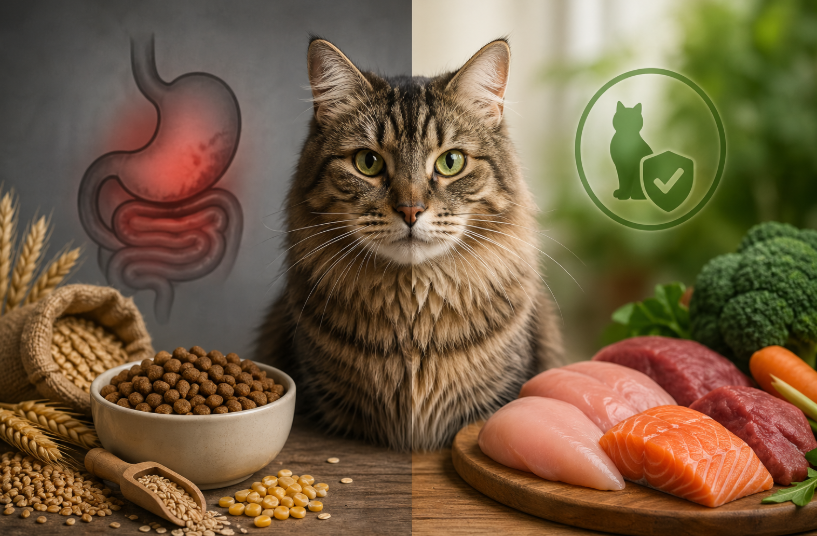
To begin with, grains are primarily used in cat food as a source of carbohydrates and energy. Unlike humans, cats do not rely heavily on carbohydrates for fuel. Instead, they metabolize protein and fat more efficiently. Because of this, a high-grain diet can sometimes lead to imbalances in nutrient intake, especially if protein levels are lower than ideal.
When discussing grains causing cat health problems, it is important to separate myths from reality. Not all grains are harmful, and many commercial diets are formulated to meet nutritional standards. However, issues can arise when grains make up too large a portion of the diet or when a cat has sensitivities to certain ingredients.
For example, some cats have difficulty digesting grains, which can lead to gastrointestinal discomfort. Others may develop mild food intolerances over time. In these cases, reducing or eliminating grains may lead to noticeable improvements in overall well-being. Therefore, paying attention to your cat’s digestion, energy levels, and coat condition can provide valuable clues.
Common Signs That Diet May Be a Problem
If grains causing cat health problems is affecting your pet, the signs are often subtle at first. Many owners overlook early symptoms because they seem minor or unrelated. However, recognizing these changes early can prevent more serious issues later.
One of the most common signs is digestive upset. This may include frequent vomiting, loose stools, or irregular bowel movements. While occasional stomach issues are normal, persistent problems may suggest that your cat’s diet is not ideal. Additionally, excessive gas or bloating can indicate that certain ingredients are not being digested properly.
Another noticeable sign is skin irritation. Cats experiencing food sensitivities may develop itchy skin, redness, or even hair loss. You might notice your cat grooming excessively or scratching more than usual. Although environmental factors can also cause these symptoms, diet often plays a significant role.
Energy levels can also provide insight. Cats that consume diets high in carbohydrates may experience fluctuations in energy. They may seem sluggish or less interested in play. On the other hand, a protein-rich diet typically supports more stable energy levels throughout the day.
In more serious cases, grains causing cat health problems may contribute to weight gain or obesity. Since carbohydrates are not a primary energy source for cats, excess intake can lead to fat accumulation. Over time, this increases the risk of diabetes and other metabolic conditions.
Why Some Cats Are More Sensitive
Not every cat will react negatively to grains, which is why the topic can be confusing. Some cats tolerate grains perfectly well, while others show clear signs of sensitivity. Genetics, age, and overall health all play a role in how a cat processes different ingredients.
Kittens, for instance, require high levels of protein for growth and development. Diets that rely too heavily on grains may not provide the necessary nutrients. Similarly, older cats may develop sensitivities as their digestive systems become less efficient. In both cases, adjusting the diet can lead to noticeable improvements.
Another factor to consider is the quality of the grains used. Highly processed grains may be harder to digest compared to whole, minimally processed ingredients. Therefore, the issue is not always the presence of grains but rather their quality and proportion within the diet.
Understanding these nuances helps clarify why grains causing cat health problems is not a one-size-fits-all issue. Instead, it requires a personalized approach based on your cat’s unique needs.
Grain-Free Diets: Are They Better?
As awareness grows around grains causing cat health problems, many owners turn to grain-free diets as a solution. While these options can be beneficial for some cats, they are not automatically superior. In fact, some grain-free formulas replace grains with other carbohydrate sources like potatoes or peas.
Therefore, it is essential to look beyond the label. A truly balanced diet should prioritize high-quality animal protein as the main ingredient. Whether grains are included or not becomes less important when the overall nutritional profile is strong.
That said, if your cat shows clear signs of intolerance, switching to a grain-free diet may help. Many owners report improvements in digestion, coat condition, and energy levels after making the change. However, it is always wise to transition gradually to avoid further digestive upset.
Consulting with a veterinarian can also provide valuable guidance. They can help you determine whether grains causing cat health problems is relevant to your pet and recommend suitable dietary adjustments.
How To Choose The Right Food
Choosing the right cat food can feel overwhelming, especially with so many options available. However, focusing on a few key principles can simplify the process. First, look for foods that list animal protein as the primary ingredient. This ensures that your cat receives the nutrients it needs to thrive.
Next, pay attention to ingredient quality. Avoid foods that rely heavily on fillers or artificial additives. While grains are not inherently harmful, they should not dominate the ingredient list. Instead, they should play a supporting role in a balanced formula.
When evaluating whether grains causing cat health problems is affecting your pet, consider conducting a simple elimination trial. This involves switching to a different diet and monitoring your cat’s response over several weeks. Improvements in digestion, skin health, or energy levels can indicate that the previous diet was not ideal.
Additionally, consistency is key. Frequent changes in diet can confuse your cat’s digestive system. Therefore, once you find a food that works well, it is best to stick with it unless new issues arise.
Balancing Nutrition For Long-Term Health
Ultimately, the goal is to provide a diet that supports your cat’s overall health and longevity. While grains causing cat health problems is a valid concern, it is only one piece of the puzzle. A balanced diet should include adequate protein, healthy fats, essential vitamins, and minerals.
Hydration is another important factor. Cats naturally have a low thirst drive, so incorporating wet food into their diet can help maintain proper hydration. This supports kidney function and overall health, especially as your cat ages.
Moreover, portion control plays a crucial role. Even the best diet can lead to problems if overfeeding occurs. Monitoring your cat’s weight and adjusting portions accordingly can prevent obesity and related health issues.
Regular veterinary check-ups are also essential. They provide an opportunity to assess your cat’s health and make any necessary dietary adjustments. Early intervention can prevent minor issues from becoming serious concerns.
Conclusion
The idea of grains causing cat health problems is not as simple as it may seem. While grains are not inherently harmful, they can contribute to issues in certain cats, especially when used in excess or when sensitivities are present. By paying attention to your cat’s behavior, digestion, and overall condition, you can identify whether diet plays a role in any health concerns.
Making informed choices about your cat’s food can lead to noticeable improvements in quality of life. Whether that means reducing grains, switching to a higher-protein diet, or simply choosing better-quality ingredients, the key is to focus on what works best for your individual cat. With careful observation and a thoughtful approach, you can ensure your pet stays healthy, active, and happy for years to come.
FAQ
- What symptoms suggest my cat has food sensitivity?
Common signs include vomiting, diarrhea, itchy skin, and low energy. Persistent symptoms may indicate dietary issues. - Are grain-free diets always better for cats?
Not necessarily. A balanced diet with high-quality protein matters more than simply removing grains. - Can grains cause allergies in cats?
True grain allergies are rare, but some cats may have sensitivities that affect digestion or skin health. - How do I know if my cat’s food is the problem?
Try switching diets gradually and observe changes in digestion, coat condition, and overall behavior. - Should I consult a vet before changing my cat’s diet?
Yes, a veterinarian can provide guidance based on your cat’s health, age, and specific nutritional needs.