When it comes to choosing the best diet for your pet, understanding organic vs natural cat food can feel confusing at first. Many labels look similar, yet they often mean very different things. As a result, cat owners may assume they are making the healthiest choice when, in reality, they are not fully informed. Knowing the difference between organic vs natural cat food helps you make smarter decisions that directly impact your cat’s health, energy, and longevity.
Cat food marketing can be misleading, especially when terms like “natural” and “organic” are used interchangeably. However, these labels follow different standards and regulations. While both options aim to improve quality, the level of control and certification varies significantly. Therefore, understanding these distinctions allows you to avoid common mistakes and select food that truly meets your expectations.
What Natural Cat Food Really Means
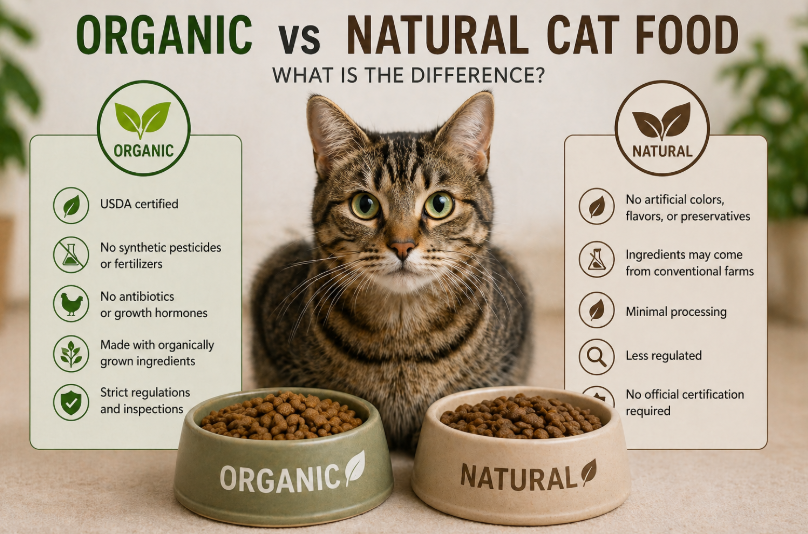
To understand organic vs natural cat food, it is important to first define what “natural” actually means. In most cases, natural cat food refers to products made without artificial colors, flavors, or preservatives. This sounds appealing, and in many ways, it is a step up from heavily processed alternatives.
However, the term “natural” is not as strictly regulated as many people believe. Manufacturers can still use ingredients that are processed or sourced from conventional farming methods. As a result, natural cat food may contain pesticides, antibiotics, or other substances that are not immediately obvious from the label.
Additionally, natural cat food does not guarantee high-quality sourcing. Ingredients may still come from lower-grade sources, even if they are technically “natural.” Therefore, when comparing organic vs natural cat food, it becomes clear that natural products offer some benefits but lack strict oversight.
That said, natural cat food can still be a good option when chosen carefully. Reading ingredient lists and understanding sourcing practices can help you identify better-quality products within this category.
What Makes Cat Food Organic
When evaluating organic vs natural cat food, the term “organic” carries a more specific meaning. Organic cat food must meet strict standards set by regulatory bodies. These standards typically include requirements for how ingredients are grown, processed, and handled.
For example, organic ingredients must be produced without synthetic pesticides, chemical fertilizers, or genetically modified organisms. Additionally, animals used in organic products are often raised without routine antibiotics or growth hormones. Because of this, organic cat food generally offers a higher level of purity and transparency.
Certification is another key difference. Products labeled as organic must pass inspections and meet specific criteria before they can carry the label. This provides an added layer of trust for consumers. Therefore, when comparing organic vs natural cat food, organic options tend to offer more consistency and accountability.
However, organic cat food is not automatically perfect. It can still vary in nutritional quality, depending on the formulation. As a result, it is important to evaluate both the label and the ingredient list when making your choice.
Key Differences Between The Two Options
The most important aspect of organic vs natural cat food lies in the level of regulation and ingredient sourcing. Natural cat food focuses on avoiding artificial additives, while organic cat food emphasizes how ingredients are produced.
Another key difference is transparency. Organic products require certification, which ensures that certain standards are met. In contrast, natural products rely more on general guidelines, which can vary between brands. Because of this, organic options often provide greater confidence in what you are feeding your cat.
Cost is also a factor to consider. Organic cat food is usually more expensive due to stricter production methods and certification processes. While this may seem like a drawback, many owners find the added assurance worth the investment. Still, natural cat food can offer a more budget-friendly alternative when chosen wisely.
Ultimately, understanding organic vs natural cat food allows you to weigh these factors based on your priorities. Whether you value strict standards or affordability, knowing the differences helps you make a balanced decision.
How To Choose The Right Option For Your Cat
Choosing between organic vs natural cat food depends on your cat’s specific needs and your personal preferences. Some cats may benefit from organic options, especially if they have sensitivities to certain ingredients. Others may do well on high-quality natural diets that prioritize protein and balanced nutrition.
Start by examining the ingredient list rather than relying solely on marketing claims. Look for high-quality animal protein as the main ingredient, as this aligns with your cat’s natural dietary needs. Additionally, avoid products with excessive fillers or vague ingredient descriptions.
Transitioning to a new diet should always be done gradually. Sudden changes can upset your cat’s digestive system, so it is best to introduce new food slowly over several days. This approach helps your cat adjust comfortably while reducing the risk of digestive issues.
Consulting a veterinarian can also provide valuable guidance. They can recommend options based on your cat’s age, health condition, and lifestyle. When comparing organic vs natural cat food, professional advice ensures that your choice supports overall well-being.
Common Misconceptions About Cat Food Labels
Many misconceptions surround organic vs natural cat food, often leading to confusion. One common belief is that natural food is always healthier than conventional options. While it may avoid artificial additives, it does not guarantee better sourcing or higher nutritional value.
Another misconception is that organic food is always superior. Although it meets stricter standards, it is not automatically the best choice for every cat. Nutritional balance remains the most important factor, regardless of the label.
Some owners also assume that higher cost equals better quality. While organic products are often more expensive, price alone does not determine value. Evaluating ingredients and nutritional content provides a more accurate picture of quality.
Understanding these misconceptions helps you approach organic vs natural cat food with a more critical perspective. This ensures that your decisions are based on facts rather than marketing claims.
Balancing Nutrition And Sustainability
When exploring organic vs natural cat food, it is also worth considering sustainability. Organic farming practices often prioritize environmental health, which can reduce long-term impact on ecosystems. For many pet owners, this aligns with a broader commitment to sustainable living.
However, sustainability should not come at the expense of your cat’s nutritional needs. Cats require specific nutrients, including high levels of protein and certain amino acids. Therefore, any diet you choose must meet these requirements first.
Combining nutritional awareness with sustainable choices creates a balanced approach. By selecting products that support both your pet and the environment, you can feel confident in your decisions. Organic vs natural cat food becomes less about choosing one over the other and more about finding the right balance.
Conclusion
Understanding organic vs natural cat food empowers you to make informed decisions that benefit your cat’s health and overall quality of life. While both options offer advantages, they differ in terms of regulation, sourcing, and transparency. Organic cat food provides stricter standards and certification, while natural cat food focuses on avoiding artificial additives.
By evaluating ingredient quality, nutritional balance, and your cat’s individual needs, you can choose the best option with confidence. Remember that no single label guarantees perfection. Instead, a thoughtful approach ensures that your cat receives the care and nutrition it deserves.
In the end, the goal is not simply to choose between organic vs natural cat food, but to create a diet that supports long-term health and happiness. With the right knowledge, you can navigate these options effectively and provide the best possible care for your feline companion.
FAQ
- Is natural cat food better than regular cat food?
Natural cat food avoids artificial additives, but quality depends on ingredient sourcing and overall formulation. - Does organic cat food improve a cat’s health?
Organic options can reduce exposure to chemicals, but balanced nutrition is the most important factor. - Can cats have allergies to certain ingredients?
Yes, some cats develop sensitivities to specific proteins or additives, regardless of the label type. - How do I switch my cat to a new diet safely?
Introduce new food gradually over several days to prevent digestive upset and allow adjustment. - Is it worth paying more for premium cat food?
It depends on quality and your cat’s needs, but higher-quality ingredients often provide better long-term value.