Harmful cat food additives are often hidden in everyday products, making it difficult for cat owners to recognize what is truly safe. While packaging may promise complete nutrition, the ingredient list can tell a very different story. Many commercial cat foods include unnecessary chemicals and fillers that may negatively affect your cat’s health over time.
Understanding what goes into your cat’s food is essential for long-term well-being. Cats rely on consistent, high-quality nutrition, yet some ingredients can disrupt digestion, trigger allergies, or lead to chronic issues. Therefore, identifying harmful cat food additives is one of the most important steps you can take to protect your pet and improve their overall quality of life.
Why Additives Are Used In Cat Food
Food manufacturers often use additives to improve shelf life, enhance flavor, or reduce production costs. While some additives serve a practical purpose, others offer little nutritional value. In many cases, these substances are included to make food more appealing to cats rather than healthier for them.
Artificial preservatives, for example, are commonly used to prevent spoilage. However, certain types may pose risks when consumed regularly. Similarly, flavor enhancers can make low-quality food taste better, masking poor ingredient quality. As a result, harmful cat food additives can remain unnoticed by pet owners who trust marketing claims.
Cost is another factor. Lower-quality ingredients are often cheaper to produce, which allows companies to keep prices competitive. Unfortunately, this can lead to the inclusion of fillers and additives that do not benefit your cat’s health. Therefore, understanding why these ingredients are used helps you make more informed choices.
Artificial Preservatives That Raise Concerns
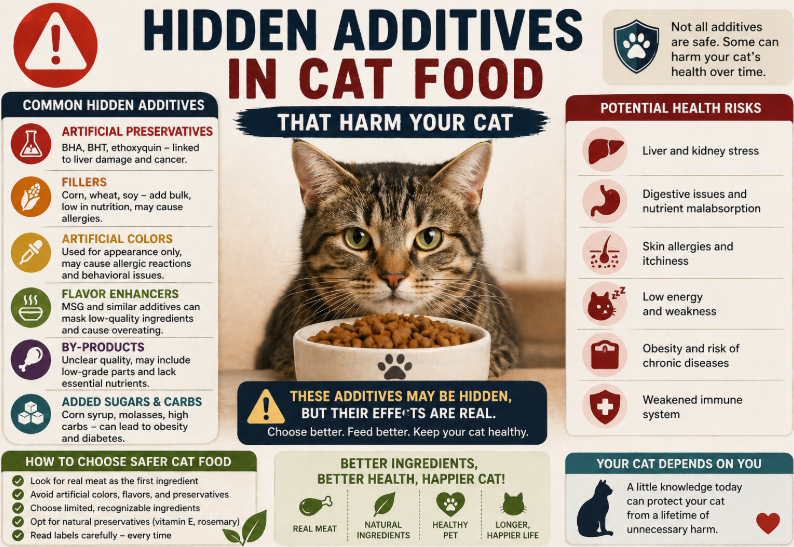
Artificial preservatives are among the most debated harmful cat food additives. Chemicals such as BHA, BHT, and ethoxyquin are commonly used to extend shelf life. While they help prevent food from spoiling, they have been linked to potential health risks in some studies.
Over time, regular exposure to these preservatives may contribute to issues such as liver stress or weakened immune function. Although regulations limit their use, concerns remain about long-term consumption. As a result, many pet owners choose to avoid products containing these additives whenever possible.
Natural alternatives, such as vitamin E or rosemary extract, offer safer preservation methods. These options help maintain freshness without introducing unnecessary risks. Therefore, choosing foods that avoid harmful cat food additives like synthetic preservatives can support better health outcomes.
Fillers That Offer Little Nutritional Value
Fillers are another common category of harmful cat food additives that can impact your cat’s diet. Ingredients like corn, soy, and wheat are often used to bulk up food without adding meaningful nutrition. While they may provide some energy, they do not meet a cat’s primary dietary needs.
Cats are obligate carnivores, which means they require animal-based proteins to thrive. Excessive fillers can dilute the quality of the diet, leading to nutritional imbalances. In addition, some cats may develop sensitivities or allergies to these ingredients.
Digestive issues are also common when fillers are present in large amounts. Cats may experience bloating, irregular bowel movements, or reduced nutrient absorption. Therefore, limiting exposure to harmful cat food additives such as fillers is essential for maintaining digestive health.
Artificial Colors And Flavor Enhancers
Artificial colors are often added to make food look more appealing to humans rather than cats. Since cats rely more on smell than sight, these additives serve little purpose in their diet. However, they are still widely used in many commercial products.
Flavor enhancers are another concern. While they can improve taste, they may encourage overeating or mask low-quality ingredients. Over time, this can lead to weight gain or nutritional imbalances. As a result, artificial colors and flavor enhancers are considered harmful cat food additives that should be avoided when possible.
In addition, some cats may react negatively to these substances. Skin irritation, digestive discomfort, or changes in behavior can occur in sensitive animals. Therefore, choosing food with natural ingredients helps reduce the risk of these issues.
By-Products And Low-Quality Protein Sources
Not all protein sources are created equal, and some fall into the category of harmful cat food additives. Meat by-products, for example, can vary widely in quality. While they may include nutritious parts, they can also contain less desirable components that offer limited value.
Lack of transparency is a major concern with by-products. Labels may not clearly indicate the source or quality of the protein, making it difficult to assess its nutritional value. As a result, your cat may not receive the nutrients they need for optimal health.
In contrast, named protein sources such as chicken or salmon provide more reliable nutrition. These ingredients are easier to identify and generally offer better quality. Therefore, avoiding vague or low-quality protein sources helps reduce reliance on harmful cat food additives.
Hidden Sugars And Unnecessary Carbohydrates
Sugar is not a natural part of a cat’s diet, yet it can still appear in some commercial foods. Ingredients like corn syrup or molasses may be added to enhance flavor. However, these substances provide no real benefit and can contribute to weight gain.
Excess carbohydrates are another issue. While small amounts may be acceptable, high levels can lead to obesity and metabolic problems. Cats are not designed to process large quantities of carbs, so these additions can strain their system.
Over time, diets high in sugar and carbohydrates may increase the risk of diabetes. Therefore, identifying and avoiding harmful cat food additives in this category is crucial for long-term health.
How To Read Labels More Effectively
Reading labels carefully is one of the best ways to avoid harmful cat food additives. Start by examining the first few ingredients, as these make up the majority of the product. High-quality foods should list real meat sources at the top.
In addition, watch for vague terms such as “meat meal” or “animal digest.” These labels often indicate lower-quality ingredients. Instead, look for clear and specific descriptions that provide transparency.
Checking for artificial additives is also important. If you see unfamiliar chemical names, it may be worth researching them further. By understanding ingredient lists, you can make better choices and reduce exposure to harmful cat food additives.
Choosing Safer Alternatives For Your Cat
Switching to better food options does not have to be complicated. Many brands now focus on natural ingredients and minimal processing. These products avoid harmful cat food additives while still providing complete nutrition.
Wet food options can also be beneficial, as they often contain fewer preservatives. In addition, they provide higher moisture content, which supports hydration. Combining wet and dry food can create a balanced and practical feeding routine.
Gradual transitions are important when changing diets. Introducing new food slowly helps prevent digestive upset and allows your cat to adjust. Over time, these changes can lead to noticeable improvements in health and behavior.
Long-Term Impact On Your Cat’s Health
The effects of harmful cat food additives may not appear immediately, but they can build over time. Chronic exposure can contribute to issues such as allergies, digestive problems, and reduced energy levels. Therefore, making better choices early can prevent long-term complications.
In addition, a cleaner diet supports overall vitality. Cats fed high-quality food often have shinier coats, better digestion, and improved energy. These benefits highlight the importance of avoiding unnecessary additives.
Consistency is key when maintaining a healthy diet. By choosing foods that prioritize natural ingredients, you create a stable foundation for your cat’s well-being. As a result, avoiding harmful cat food additives becomes a simple yet powerful way to support long-term health.
Conclusion
Harmful cat food additives are more common than many pet owners realize, yet they can have a lasting impact on your cat’s health. By understanding what to look for and making informed choices, you can reduce exposure to unnecessary chemicals and fillers. This not only improves your cat’s diet but also supports their overall quality of life.
Focusing on natural, high-quality ingredients is the best way to ensure proper nutrition. While it may take some effort to read labels and compare options, the benefits are well worth it. With consistent care and attention, you can create a healthier and safer feeding routine that helps your cat thrive.
FAQ
- What are the most common ingredients to avoid in cat food?
Artificial preservatives, fillers, and synthetic additives are commonly avoided for better health. - Can additives cause allergies in cats?
Yes, some additives can trigger allergic reactions or sensitivities in certain cats. - Is grain-free food always better for cats?
Not always, but reducing unnecessary fillers can improve digestion and overall nutrition. - How can I improve my cat’s diet quickly?
Start by choosing food with real meat and fewer artificial ingredients, then transition gradually. - Do all commercial foods contain additives?
Not all, but many do. Reading labels helps you find cleaner and safer options.