If you are trying to fix litter box problems in your home, you are likely dealing with a frustrating and confusing situation. Many cat owners assume the issue is purely behavioral, yet stress and diet often play a much larger role than expected. Understanding how these factors influence your cat’s habits can help you fix litter box problems more effectively and prevent them from returning.
Cats are naturally clean animals, so when they avoid the litter box, something is usually wrong. While some issues are medical, many are linked to emotional stress or digestive discomfort. Therefore, instead of focusing only on the litter box itself, it is important to look at your cat’s environment, routine, and nutrition. By taking a broader approach, you can fix litter box problems at the source rather than just managing the symptoms.
How Stress Triggers Litter Box Issues
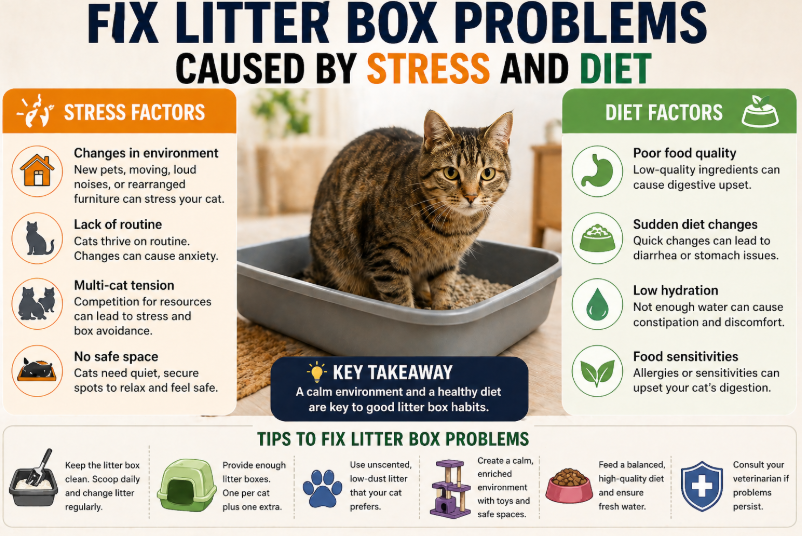
Stress is one of the most common reasons cats stop using their litter box consistently. Even small changes in the home can disrupt your cat’s sense of security. For example, moving furniture, introducing a new pet, or changing routines can create anxiety. As a result, your cat may begin avoiding the litter box or using inappropriate areas.
When trying to fix litter box problems, it is essential to identify possible stress triggers. Cats rely heavily on routine and familiarity. Therefore, sudden changes can make them feel unsafe. In response, they may mark territory or seek alternative spots that feel more secure.
Additionally, competition in multi-cat households can increase stress levels. If one cat feels intimidated, it may avoid shared litter boxes. Consequently, providing separate spaces and reducing conflict can help fix litter box problems caused by social tension.
Creating a calm environment plays a major role in solving these issues. Simple changes like maintaining a consistent routine, offering quiet spaces, and using calming aids can reduce anxiety. Over time, this stability encourages your cat to return to normal habits.
The Role Of Diet In Litter Box Behavior
Diet has a direct impact on your cat’s digestive health, which in turn affects litter box use. Poor-quality food can lead to issues like diarrhea, constipation, or discomfort. When this happens, your cat may associate the litter box with pain. As a result, it may start avoiding it altogether.
To fix litter box problems linked to diet, focus on improving food quality and consistency. High-protein, balanced diets support better digestion and reduce the likelihood of gastrointestinal issues. Additionally, sudden changes in food can upset your cat’s stomach. Therefore, always transition gradually when introducing new food.
Hydration is another important factor. Cats often do not drink enough water, which can lead to constipation. Incorporating wet food into your cat’s diet can help maintain proper hydration and support healthy digestion. This simple adjustment can make a significant difference when you are trying to fix litter box problems.
Food sensitivities may also play a role. Some cats react poorly to certain ingredients, leading to ongoing digestive discomfort. Identifying and eliminating these triggers can improve both health and litter box behavior.
Recognizing Warning Signs Early
When you want to fix litter box problems, early detection is key. Cats often show subtle signs before the problem becomes severe. For example, you may notice changes in frequency, posture, or hesitation when using the litter box. These signs indicate discomfort or stress.
Other warning signs include vocalizing during elimination, excessive grooming, or changes in appetite. Although these behaviors may seem unrelated, they often point to underlying issues affecting litter box use. Therefore, paying attention to small changes can help you fix litter box problems before they escalate.
Consistency in monitoring your cat’s habits is important. By observing patterns, you can identify potential triggers and address them quickly. This proactive approach not only solves current issues but also prevents future problems.
Practical Steps To Improve Litter Box Habits
Once you understand the causes, you can take targeted steps to fix litter box problems effectively. Start by ensuring the litter box itself is clean and accessible. Cats prefer clean environments, so daily scooping is essential. Additionally, placing the box in a quiet, low-traffic area can reduce stress.
The type of litter also matters. Some cats are sensitive to texture or scent, which can lead to avoidance. Experimenting with different options may help you find one your cat prefers. However, changes should be introduced gradually to avoid further disruption.
Providing multiple litter boxes is another effective strategy. A general rule is one box per cat plus one extra. This reduces competition and gives each cat a comfortable space. By following this approach, you can fix litter box problems in multi-cat households more easily.
Positive reinforcement also plays a role. When your cat uses the litter box correctly, offering praise or treats can encourage the behavior. Over time, this builds a positive association and reinforces good habits.
Reducing Stress Through Environment Changes
To truly fix litter box problems, addressing environmental stress is essential. Cats thrive in stable, predictable environments. Therefore, minimizing sudden changes can help maintain consistent behavior.
Providing enrichment is another important step. Interactive toys, scratching posts, and climbing structures give your cat outlets for energy and stress. Without these options, your cat may express frustration through unwanted behaviors.
Safe spaces are equally important. Cats need areas where they can retreat and feel secure. Whether it is a quiet corner or a cozy bed, these spaces help reduce anxiety. As stress levels decrease, litter box habits often improve naturally.
In some cases, pheromone diffusers or calming sprays can provide additional support. These products mimic natural signals that promote relaxation. When used consistently, they can help fix litter box problems related to anxiety.
When To Seek Veterinary Help
Although many issues can be resolved at home, some situations require professional attention. If your cat shows signs of pain, blood in urine or stool, or persistent avoidance, it is important to consult a veterinarian. Medical conditions such as urinary tract infections or digestive disorders can mimic behavioral problems.
A thorough examination can rule out health issues and guide your next steps. In some cases, treatment or dietary adjustments may be necessary. Addressing medical concerns ensures that your efforts to fix litter box problems are both safe and effective.
Even if the issue appears behavioral, professional advice can provide valuable insights. Veterinarians can recommend specific strategies based on your cat’s needs. This guidance helps you achieve lasting results.
Building A Long-Term Solution
Fixing litter box issues is not just about immediate changes. Long-term success requires consistency and ongoing care. Establishing a routine that supports both physical and emotional health is essential.
Regular cleaning, stable feeding schedules, and a stress-free environment create a strong foundation. Over time, these habits reinforce positive behavior and reduce the likelihood of recurring issues. By maintaining these practices, you can fix litter box problems permanently rather than temporarily.
Patience is also important. Behavioral changes take time, especially if the problem has been ongoing. However, with consistent effort, most cats return to proper habits. The key is to remain calm and avoid punishment, which can increase stress and worsen the situation.
Conclusion
Learning how to fix litter box problems caused by stress and diet requires a thoughtful and balanced approach. By understanding your cat’s needs and addressing both emotional and physical factors, you can create a solution that works long term. Whether the issue stems from anxiety, poor nutrition, or environmental changes, the right adjustments can restore normal behavior.
Ultimately, fixing litter box issues is about improving your cat’s overall well-being. When your cat feels safe, comfortable, and healthy, proper litter box habits follow naturally. With patience, consistency, and attention to detail, you can create a cleaner home and a happier pet.
FAQ
- What causes sudden litter box avoidance in cats?
Sudden changes, stress, or health issues often trigger avoidance behavior in cats. - Can diet really affect litter box habits?
Yes, poor digestion or food sensitivities can lead to discomfort and changes in behavior. - How many litter boxes should I have?
You should have one box per cat plus one extra to reduce stress and competition. - Are scented litters a problem for cats?
Some cats dislike strong scents, which can lead to avoidance of the litter box. - When should I worry about litter box issues?
Seek veterinary help if symptoms persist or if you notice signs of pain or illness.