Cats are famous for their sleeping habits. Many spend between 12 and 16 hours resting each day, while some sleep even longer. Because sleep plays such an important role in physical and mental health, disruptions can have a noticeable impact on behavior and well-being. When owners notice changes in sleeping patterns, stress is often one of the most overlooked causes. Understanding Cat Sleep Stress can help explain why a normally relaxed cat suddenly struggles to settle down, stay asleep, or maintain healthy rest routines.
Just like humans, cats respond to emotional and environmental pressures. Their bodies release stress hormones that prepare them to react to perceived threats. While this response can be useful in dangerous situations, ongoing stress often creates problems. One of the first areas affected is sleep. Consequently, Cat Sleep Stress can influence energy levels, mood, appetite, and overall health.
Many cat owners assume that a sleeping cat is always a content cat. However, sleep quality matters just as much as sleep duration. A cat may spend many hours resting while still experiencing disrupted or poor-quality sleep. Therefore, identifying sources of stress becomes an important part of supporting long-term wellness.
Stress affects each cat differently. Some become withdrawn, while others grow more vocal or restless. Because sleep disturbances often develop gradually, they can easily go unnoticed until behavioral changes become more obvious.
Why Sleep Is Essential for Feline Health
Sleep supports nearly every aspect of a cat’s health. During rest, the body repairs tissues, regulates hormones, strengthens immune function, and processes daily experiences. Healthy sleep also supports emotional stability and cognitive function.
Cats naturally cycle through periods of light and deep sleep. During deeper stages, the body performs many important restorative functions. When Cat Sleep Stress interrupts these cycles, cats may not receive the full benefits of their normal rest patterns.
Adequate sleep helps maintain healthy energy levels. Well-rested cats often appear more playful, alert, and engaged. In contrast, cats experiencing disrupted sleep may seem irritable, anxious, or less active than usual.
Sleep also contributes to healthy digestion, metabolism, and immune responses. Consequently, prolonged sleep disturbances may influence multiple aspects of physical health. This connection explains why veterinarians often consider sleep patterns when evaluating behavioral or medical concerns.
Although cats spend much of their lives sleeping, they remain highly sensitive to their surroundings. Even subtle changes can affect their ability to relax completely. Therefore, environmental stability plays a major role in sleep quality.
How Stress Affects the Sleeping Brain
When cats encounter stressful situations, their bodies activate survival mechanisms designed to increase awareness and responsiveness. Stress hormones such as cortisol prepare the body to react quickly to potential threats.
While short-term stress responses are normal, chronic activation can contribute to Cat Sleep Stress. Elevated stress levels may make it difficult for cats to enter deeper stages of sleep or remain asleep for extended periods.
Instead of fully relaxing, stressed cats often remain partially alert. They may wake frequently, change sleeping locations repeatedly, or react more strongly to sounds and movement. As a result, sleep becomes less restorative.
This heightened vigilance stems from natural instincts. In the wild, staying alert could improve survival. However, in domestic environments, prolonged vigilance often creates unnecessary strain on the body.
Stress-related sleep disruption may also affect daytime behavior. Cats experiencing poor sleep sometimes become more reactive, anxious, or withdrawn. Consequently, a cycle develops in which stress affects sleep and poor sleep increases stress.
Recognizing this relationship helps owners understand why behavioral changes and sleep problems often occur together.
Common Sources of Cat Sleep Stress
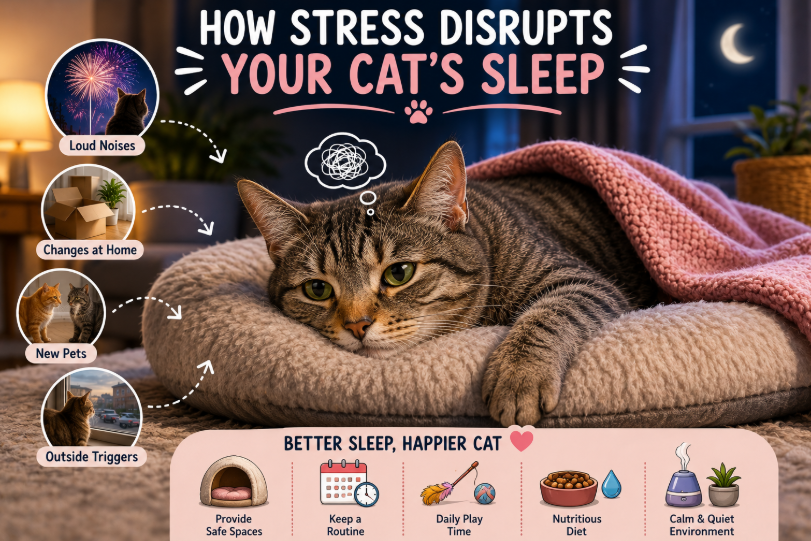
Many factors can contribute to Cat Sleep Stress, and some triggers are surprisingly subtle. Changes within the home rank among the most common causes. Moving furniture, introducing new pets, welcoming guests, or changing daily schedules may affect a cat’s sense of security.
Cats thrive on predictability. Therefore, disruptions to established routines can create uncertainty and anxiety. Even positive changes may temporarily increase stress levels.
Household noise also influences sleep quality. Construction work, loud televisions, barking dogs, or frequent activity during nighttime hours may prevent cats from settling comfortably.
Multi-pet households sometimes create additional challenges. Competition for resources such as food bowls, litter boxes, resting areas, and attention can increase tension. Consequently, some cats struggle to relax fully when they feel threatened or uncomfortable.
Environmental changes outside the home may contribute as well. Outdoor cats often encounter unfamiliar animals, weather changes, and territorial disputes. These experiences can increase Cat Sleep Stress and affect resting habits.
Even boredom can influence stress levels. Cats lacking mental stimulation may experience frustration that contributes to restlessness and disrupted sleep.
Signs Your Cat’s Sleep May Be Affected
Identifying Cat Sleep Stress requires observing both sleep patterns and overall behavior. Some signs appear obvious, while others develop gradually.
One common indicator is frequent waking. A cat that previously slept peacefully may begin changing locations repeatedly or reacting to minor disturbances. Restless sleeping positions can also suggest discomfort or anxiety.
Changes in sleeping schedules often provide important clues. Some stressed cats sleep less than usual, while others sleep more as a coping mechanism. Therefore, both increases and decreases in sleep may warrant attention.
Behavioral changes frequently accompany sleep disruption. Irritability, increased vocalization, excessive grooming, hiding, or reduced social interaction may indicate underlying stress.
Appetite changes can also occur. Since stress affects multiple body systems, cats experiencing Cat Sleep Stress sometimes eat more or less than normal.
Owners should pay attention to patterns rather than isolated incidents. Occasional restlessness is normal. However, persistent changes often suggest that something within the environment or routine requires attention.
The Connection Between Anxiety and Nighttime Activity
Many owners notice that stressed cats become more active at night. This behavior often relates directly to Cat Sleep Stress and heightened vigilance.
Cats naturally display crepuscular tendencies, meaning they are most active around dawn and dusk. However, stress can amplify nighttime activity beyond normal levels.
Anxious cats may patrol the house, vocalize, or repeatedly check their surroundings. Because they struggle to relax fully, nighttime becomes a period of increased awareness rather than restful sleep.
Changes in household routines sometimes contribute to this pattern. For example, a cat left alone for long periods during the day may seek interaction at night. Similarly, inconsistent feeding schedules can influence sleeping habits.
Creating predictable evening routines often helps reduce nighttime restlessness. Structured play sessions, regular feeding times, and quiet sleeping areas encourage relaxation before bedtime.
By addressing the causes of Cat Sleep Stress, many owners notice significant improvements in nighttime behavior.
How Veterinarians Evaluate Sleep Problems
When sleep disturbances persist, veterinary evaluation may become necessary. Veterinarians understand that Cat Sleep Stress is not always purely behavioral. Medical conditions can sometimes contribute to sleep disruption.
Pain is one common example. Arthritis, dental disease, injuries, and chronic illnesses may prevent comfortable rest. Consequently, veterinarians often investigate physical health before assuming stress is the sole cause.
Thyroid disorders, kidney disease, and cognitive dysfunction can also affect sleeping patterns. Older cats, in particular, may experience age-related changes that influence rest.
Veterinarians typically review medical history, behavioral observations, and environmental factors. This comprehensive approach helps identify potential contributors to sleep disturbances.
Owners who track sleeping habits often provide valuable information during consultations. Details regarding timing, frequency, and associated behaviors help guide diagnosis and treatment recommendations.
Because many factors influence sleep, professional evaluation ensures that underlying health concerns do not go unnoticed.
Helping Your Cat Sleep More Comfortably
Reducing Cat Sleep Stress often involves improving both environmental comfort and emotional security. Creating predictable daily routines represents one of the most effective strategies.
Cats feel more confident when they know what to expect. Consistent feeding schedules, regular play sessions, and stable household routines help reduce uncertainty.
Providing safe sleeping spaces also supports better rest. Many cats prefer elevated locations, enclosed beds, or quiet rooms away from household activity. These areas allow them to relax without feeling vulnerable.
Interactive play provides additional benefits. Physical activity helps reduce tension while satisfying natural hunting instincts. Consequently, cats often sleep more soundly after engaging play sessions.
Environmental enrichment can further improve emotional well-being. Scratching posts, climbing structures, puzzle feeders, and window perches help prevent boredom and frustration.
Reducing exposure to known stressors remains equally important. Small adjustments can significantly decrease Cat Sleep Stress and support healthier sleep patterns over time.
Conclusion
Cat Sleep Stress can affect much more than sleeping habits alone. Ongoing stress influences emotional health, physical wellness, behavior, and overall quality of life. While occasional restlessness is normal, persistent sleep disruption often signals that a cat is struggling with environmental or emotional challenges.
Fortunately, understanding the causes of stress allows owners to take proactive steps. Stable routines, comfortable sleeping spaces, environmental enrichment, and veterinary guidance can all support healthier rest.
Because sleep plays such a critical role in feline wellness, protecting sleep quality should remain a priority. By recognizing the signs of stress and addressing potential triggers, owners can help their cats enjoy deeper, more restorative sleep and a happier daily life.
FAQ
1. Can anxiety really affect a cat’s sleep quality?
Yes. Anxiety can make it difficult for cats to relax fully and reach restorative stages of sleep.
2. What household changes commonly disrupt feline rest?
New pets, visitors, schedule changes, loud noises, and furniture rearrangements often contribute to stress.
3. Why does my pet seem more active at night?
Stress, boredom, inconsistent routines, and natural activity patterns can all increase nighttime behavior.
4. Should I worry if sleeping habits suddenly change?
Sudden changes may indicate stress or medical issues and should be monitored closely.
5. How can I create a better sleeping environment?
Provide quiet resting spaces, maintain routines, reduce stressors, and offer regular enrichment activities.