
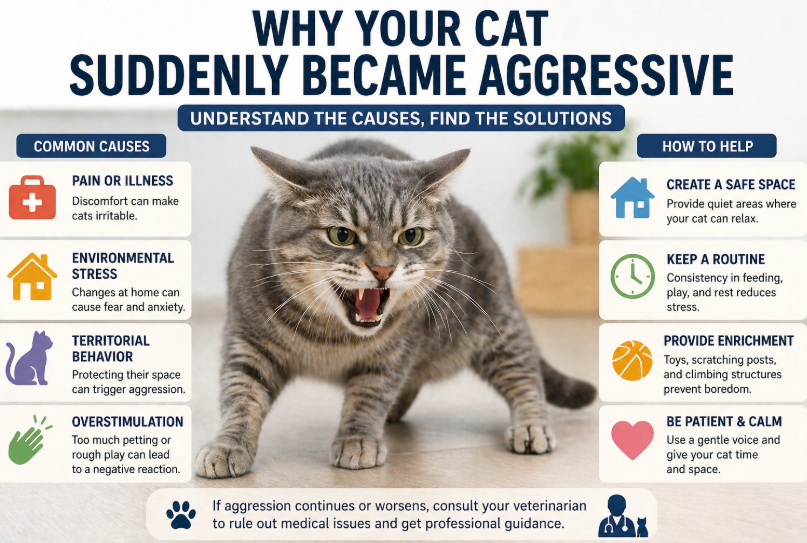
If your normally calm pet starts acting out, understanding cat sudden aggression becomes essential. Many cat owners feel confused when behavior changes without warning, especially when their pet becomes defensive or hostile. While it may seem unpredictable, cat sudden aggression usually has underlying causes that can be identified and managed with the right approach.
Cats rarely become aggressive without a reason. Instead, their behavior often reflects discomfort, fear, or frustration. By recognizing the triggers behind cat sudden aggression, you can take steps to restore a peaceful and safe environment. With patience and awareness, most cases can be improved significantly.
Why Behavior Can Change So Quickly
Cats rely heavily on routine and stability. When something disrupts their environment, it can lead to cat sudden aggression. Even small changes, such as moving furniture or altering feeding times, may cause stress.
In addition, cats are sensitive to physical discomfort. Pain or illness can make them react defensively. Because they cannot communicate verbally, aggression may become their way of signaling distress.
Understanding this connection helps you look beyond the behavior itself. Instead of reacting emotionally, you can focus on identifying the root cause of cat sudden aggression.
Common Triggers Behind Aggressive Behavior
There are several common triggers linked to cat sudden aggression. Fear is one of the most frequent causes. When a cat feels threatened, it may respond with defensive actions such as hissing or swatting.
Territorial behavior is another factor. Cats often protect their space, especially when new pets or people are introduced. This can lead to sudden outbursts if boundaries are crossed.
Overstimulation during play or petting can also trigger aggression. Some cats have limits, and exceeding them may result in a sharp reaction. Recognizing these triggers helps prevent repeated incidents.
Health Issues That May Cause Aggression
Medical conditions are an important consideration when dealing with cat sudden aggression. Pain from injuries, dental problems, or internal issues can make cats more irritable. Even minor discomfort can lead to noticeable changes in behavior.
Hormonal imbalances or neurological conditions may also play a role. These issues can affect mood and response patterns, making aggression more likely.
If aggression appears suddenly without an obvious cause, a health check is essential. Consulting reliable sources like https://www.petmd.com/ can provide insight, but professional evaluation remains the best option.
Stress And Environmental Factors
Stress is a major contributor to cat sudden aggression. Changes in the home, such as new pets, loud noises, or unfamiliar visitors, can disrupt a cat’s sense of security. As a result, the cat may react defensively.
Lack of stimulation can also create frustration. Bored cats may release pent-up energy through aggressive behavior. This is especially common in indoor environments where activity is limited.
Creating a stable and enriching environment reduces stress levels. When cats feel secure, the likelihood of cat sudden aggression decreases.
Understanding Body Language Before Aggression
Recognizing early warning signs is key to preventing cat sudden aggression. Cats often show subtle signals before reacting. These may include flattened ears, a flicking tail, or dilated pupils.
Ignoring these signs can lead to escalation. However, responding early allows you to remove the trigger or give your cat space. This helps prevent aggressive incidents from occurring.
Learning your cat’s body language improves communication and reduces misunderstandings. Over time, this awareness becomes a valuable tool in managing behavior.
How To Calm An Aggressive Cat Safely
When dealing with cat sudden aggression, safety should always come first. Avoid direct confrontation, as this may worsen the situation. Instead, give your cat space to calm down naturally.
Speaking in a soft, calm voice can help reduce tension. Sudden movements should be avoided, as they may be perceived as threats. In addition, removing the source of stress can help restore calm more quickly.
Consistency in your approach is important. Over time, your cat will begin to associate calm behavior with a safe environment.
Improving Daily Routine And Environment
A consistent routine plays a major role in reducing cat sudden aggression. Feeding, playtime, and rest should follow predictable patterns. This stability helps cats feel secure.
Providing enrichment is equally important. Interactive toys, climbing structures, and window views offer mental stimulation. These activities help reduce frustration and improve overall behavior.
For additional tips on creating a balanced pet lifestyle, you can explore https://www.wellnessonthegreen.com/ for helpful guidance.
Training And Positive Reinforcement
Training can be effective in managing cat sudden aggression when done correctly. Positive reinforcement encourages desired behavior without causing fear. Rewarding calm actions helps reinforce good habits.
Punishment should be avoided, as it often increases anxiety and aggression. Instead, focus on redirecting behavior through play or distraction.
Patience is essential during this process. Behavioral changes take time, but consistent effort leads to lasting improvement.
When Professional Help Is Needed
In some cases, cat sudden aggression may require professional intervention. If aggressive behavior becomes frequent or severe, consulting a veterinarian or behavior specialist is recommended.
These professionals can identify underlying causes and provide tailored solutions. They may also recommend behavioral therapy or adjustments to the environment.
Reliable organizations such as https://www.aafco.org/ offer information about overall pet health, which can support better decision-making.
Preventing Future Aggressive Episodes
Preventing cat sudden aggression involves maintaining a balanced lifestyle. Regular play, proper nutrition, and a stable environment all contribute to better behavior.
Monitoring your cat’s health is also important. Early detection of medical issues can prevent aggression linked to discomfort. In addition, gradual introductions to new experiences help reduce stress.
By staying proactive, you can minimize the chances of future incidents and maintain a peaceful home.
Conclusion
Cat sudden aggression can be alarming, but it is often a response to underlying issues rather than random behavior. By understanding the causes and recognizing early signs, you can take effective steps to manage and prevent aggression.
Consistency, patience, and awareness are key to improving your cat’s behavior. With the right approach, you can restore trust and create a safe, comfortable environment for your pet. Over time, these efforts lead to a calmer and happier cat.
FAQ
- Why did my cat suddenly become aggressive?
It is often due to stress, fear, or underlying health issues. - Can pain cause aggressive behavior in cats?
Yes, discomfort can make cats react defensively. - How can I calm my cat during an aggressive episode?
Give space, avoid sudden movements, and remove stress triggers. - Is aggression a sign of a serious problem?
It can be if it appears suddenly or becomes frequent. - Should I punish my cat for aggressive behavior?
No, positive reinforcement and calm responses are more effective.