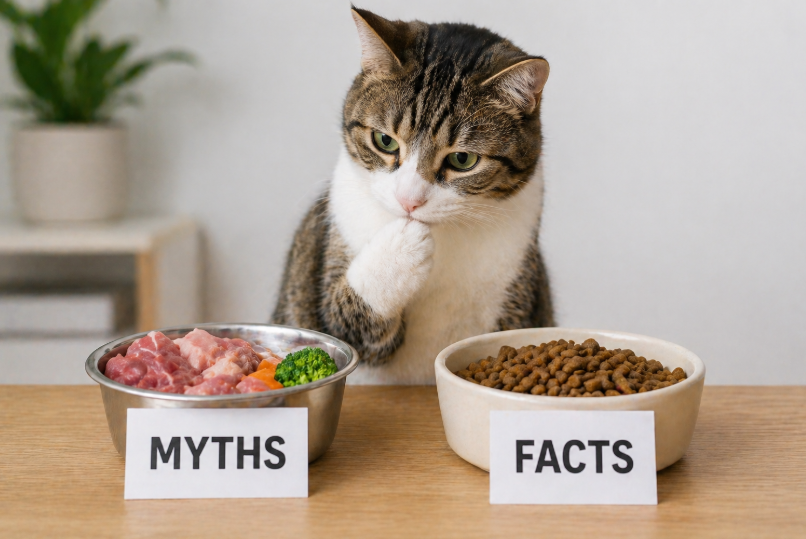
Understanding natural cat food myths is essential if you want to make better decisions about your cat’s diet. With so much information online, it is easy to believe claims that sound convincing but lack real evidence. While natural diets can offer benefits, many misconceptions lead owners to make choices that are not always safe or balanced. By recognizing natural cat food myths, you can avoid common mistakes and focus on what truly supports your cat’s health.
Cats have specific nutritional needs that must be met consistently. When myths influence feeding habits, these needs may be overlooked. Therefore, learning the truth behind natural cat food myths helps you provide a diet that is both safe and effective.
Why Misinformation About Cat Food Is So Common
The rise of online advice has made natural cat food myths more widespread. Many claims are based on personal experiences rather than scientific evidence. While these stories may seem helpful, they often lack proper context.
Marketing also plays a role. Some products are labeled as natural without meeting clear standards. This creates confusion and leads to misunderstandings about what natural feeding actually means.
In addition, trends can influence opinions. When certain diets become popular, people may follow them without fully understanding their impact. As a result, natural cat food myths continue to spread.
Myth One Natural Always Means Better
One of the most common natural cat food myths is that natural food is always healthier. While natural ingredients can be beneficial, they do not automatically guarantee balanced nutrition.
Cats require specific nutrients in precise amounts. A diet that lacks balance can lead to deficiencies, even if the ingredients are high quality. For example, missing essential nutrients like taurine can cause serious health issues.
Because of this, balance should always come first. Natural options must still meet nutritional requirements to be truly beneficial.
Myth Two Homemade Diets Are Always Safe
Many people believe that homemade meals are safer, but this is another example of natural cat food myths. While preparing food at home gives you control over ingredients, it also requires careful planning.
Without proper knowledge, homemade diets may lack essential vitamins and minerals. This can lead to long-term health problems. In addition, incorrect preparation can introduce safety risks.
Consulting reliable sources or professionals helps ensure that homemade meals are complete. A well-planned approach is necessary to avoid the risks associated with this myth.
Myth Three Raw Diets Are Perfect For Every Cat
Raw feeding is often promoted as the most natural option, yet this belief is one of the more debated natural cat food myths. While some cats may tolerate raw diets well, others may not.
Raw food carries potential risks, including bacterial contamination. Handling and storage require strict hygiene to prevent issues. In addition, not all raw diets provide balanced nutrition.
Each cat has unique needs, so there is no one-size-fits-all solution. Understanding this helps you make informed decisions rather than relying on assumptions.
Myth Four Cats Do Not Need Supplements
Another common misconception is that natural diets eliminate the need for supplements. This is one of the more misleading natural cat food myths because even natural ingredients may not provide complete nutrition.
Certain nutrients are difficult to obtain in the correct amounts without supplementation. For example, calcium balance is critical for bone health, and it may require additional support.
Ignoring this need can lead to imbalances over time. Proper supplementation ensures that your cat receives everything required for long-term health.
Myth Five Grain Free Means Healthier
Grain-free diets are often marketed as superior, but this belief is among the most persistent natural cat food myths. While cats do not require large amounts of grains, not all grains are harmful.
Some grain-free products replace grains with other fillers that offer little nutritional value. This can result in a diet that is not significantly better than traditional options.
The focus should always be on ingredient quality and balance rather than specific labels. Understanding this helps you avoid falling for marketing-driven myths.
How To Identify Reliable Information
Avoiding natural cat food myths starts with identifying trustworthy sources. Scientific research and veterinary advice provide more reliable information than anecdotal claims.
Reading labels carefully also helps. Look for clear ingredient lists and balanced nutritional profiles. Avoid vague descriptions that make it difficult to assess quality.
For additional guidance, you can explore https://www.wellnessonthegreen.com/ to learn more about proper feeding practices and nutrition.
The Importance Of Balanced Nutrition
Balanced nutrition is the key to overcoming natural cat food myths. Regardless of the feeding method, your cat’s diet must include the right proportions of protein, fat, vitamins, and minerals.
High-quality protein should always be the foundation. In addition, essential nutrients must be present in the correct amounts to support overall health.
Consistency is also important. Sudden changes or incomplete diets can lead to digestive problems and other issues. By focusing on balance, you move beyond myths and provide real benefits.
When To Seek Professional Advice
If you are unsure about your cat’s diet, seeking professional advice is always a wise step. Veterinarians can help you evaluate feeding plans and ensure nutritional completeness.
This is especially important when considering significant diet changes. Professional guidance reduces risks and helps you avoid common mistakes linked to natural cat food myths.
Reliable resources such as https://www.petmd.com/ and https://www.aafco.org/ can also provide helpful information about proper nutrition.
Building A Smarter Feeding Approach
Moving past natural cat food myths requires a thoughtful approach to feeding. Start by focusing on high-quality ingredients and balanced nutrition. Avoid making decisions based solely on trends or marketing claims.
Consistency and observation are also important. Monitoring your cat’s health helps you understand how well the diet is working. Adjustments can then be made as needed.
Over time, this approach leads to better results and a healthier pet. It also helps you make confident decisions based on facts rather than myths.
Conclusion
Natural cat food myths can easily influence how you feed your cat, but not all of them are based on accurate information. While natural diets can be beneficial, they must be balanced and carefully planned to support your cat’s needs.
By understanding these myths and focusing on reliable information, you can make smarter choices. This ensures that your cat receives proper nutrition and avoids unnecessary risks. In the end, informed decisions lead to better health and a happier life for your pet.
FAQ
- Are natural diets always better for cats?
Not always, as balance and proper nutrition are more important than the label. - Can homemade food replace commercial cat food completely?
Yes, but only if it is carefully balanced and meets all nutritional needs. - Is raw feeding safe for all cats?
Not necessarily, as some cats may not tolerate raw diets well. - Do cats need supplements on natural diets?
Often yes, to ensure they receive all essential nutrients. - How can I avoid misinformation about cat food?
Rely on scientific sources and professional advice rather than trends.